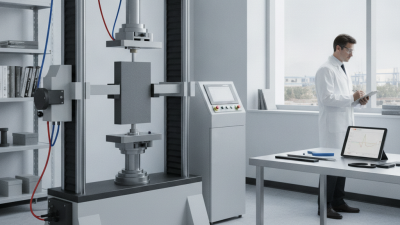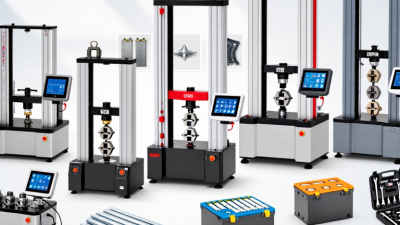

Choosing a friction testing machine starts with a practical question: what surfaces, loads, and motion will your test represent? A packaging film sliding across another film needs a different setup from a coated metal part moving against a polymer. Get that choice wrong, and a precise-looking result may describe the machine more than the material. Small details matter.
For plastic films, ASTM D1894 and ISO 8295 specify test methods for measuring static and kinetic coefficients of friction. These standards are useful professional references, not universal equipment rankings. They define important conditions, including specimen preparation and test procedure. Your application may require other methods, contact geometries, or environmental controls. Check the relevant standard before comparing instruments.
A suitable friction testing machine should match your sample size, force range, speed, and required outputs. Consider whether it can record both breakaway force and steady sliding force. Ask how the load cell is calibrated, how repeatability is verified, and whether fixtures hold thin or uneven specimens securely. A film curling at the clamp can distort results. So can dust, humidity, or inconsistent surface conditioning.
Look beyond headline specifications. Review sample test reports, software exports, service support, and the supplier’s experience with your materials. These details reveal what routine operation may actually feel like. There is no perfect machine for every lab. That is worth remembering. A careful method, trained operators, and documented conditions often matter as much as the instrument itself. Decide what decisions your test results must support, then compare machines against those needs.
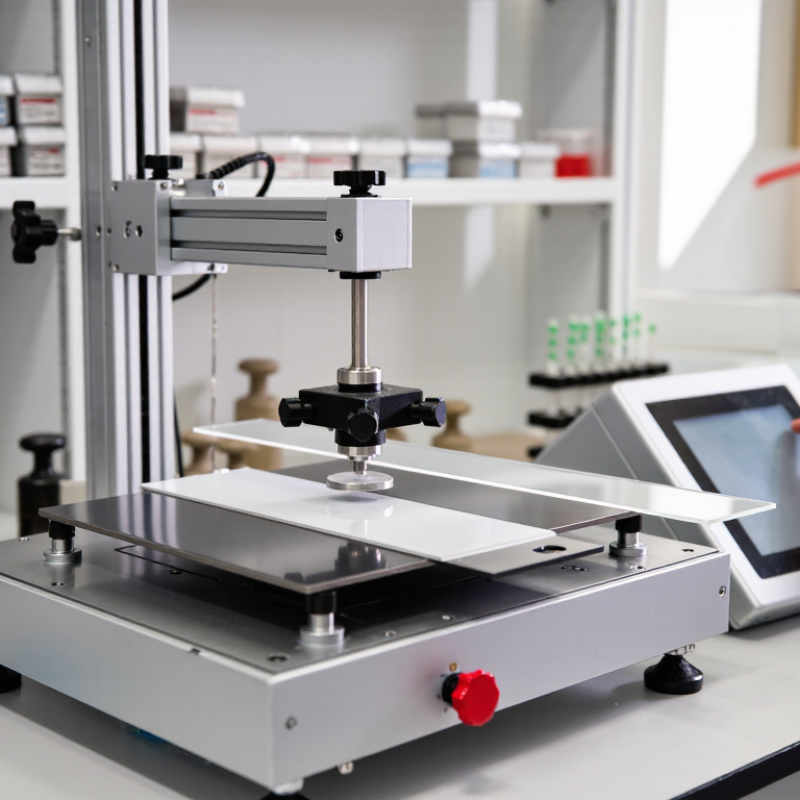
Before selecting a friction testing machine, define the decision your test must support. Are you comparing coatings, checking material consistency, or studying wear during repeated sliding? A screening test may need quick, repeatable friction readings. A research study may require force traces and wear measurements over time. Small differences matter.
Specify the material pair, surface preparation, contact geometry, normal load, sliding speed, stroke length, and test duration. Testing a polymer against a metal plate? Set each condition before the first run. Record temperature and humidity, too; changes in room conditions can appear to be material effects. That detail is easy to miss. Decide how many repeats you need, and whether a recognized test method fits your purpose. A method is useful only when its conditions match the question you are asking.
Then define the required outputs and measurement range. Do you need an average coefficient of friction, peak values, or a time-based curve? Check that the instrument can measure the expected forces accurately and that its fixtures hold your samples without unwanted movement. Consider how results will be recorded and compared. I would not assume the most elaborate setup is automatically best; extra controls can add complexity without improving a simple comparison. Still, a narrow test plan may miss behavior that matters in real use.
Choose the material pair before selecting a friction tester. Plastic film against steel behaves differently from rubber against concrete or a lubricated metal contact. Surface roughness, contact pressure, sliding speed, temperature, and humidity can all change the result. Friction is not a fixed property of one material. ASTM D1894 measures static and kinetic friction for plastic film and sheeting with a sled-based method; its standard setup uses a 200 g sled moving at 150 mm/min. These conditions suit film comparisons, not every real-world contact.
Match the machine to the contact geometry. A pin-on-disk tester, described in ASTM G99, suits sliding contacts where a pin travels against a rotating disk. For packaging films, use a sled method instead. Record the counterface material, applied load, speed, and lubrication state. Small details matter. A polished steel disk may produce a different result from a worn one, even with the same test load. One limitation remains: laboratory contact rarely reproduces every field condition.
Tips: Test the actual material pair when possible. Keep surface finish and conditioning consistent. If the product gets wet or warm in use, test those conditions too. Otherwise, the result may look precise but answer the wrong question. For reliable comparisons, report the test method and conditions alongside each coefficient, following ASTM D1894 or ASTM G99 as appropriate.
Typical dry-sliding coefficient-of-friction ranges illustrate why material pair, surface condition, and test environment matter when selecting a friction testing machine. Use the ranges as a starting point, not as guaranteed material properties or machine specifications.
Coefficient of friction varies with surface finish, normal load, sliding speed, temperature, humidity, and contamination. Identify these conditions before choosing a tester and its contact geometry, load capacity, speed range, and environmental controls.
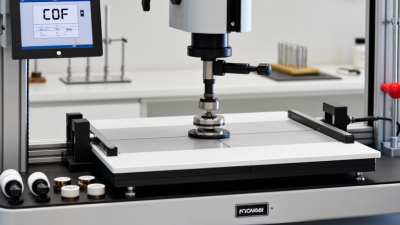
Friction testing machines reproduce different kinds of contact, so their motions matter as much as their maximum load. A pin-on-disk tester creates a circular wear track and suits studies of sliding pairs under steady contact.
Each setup answers a different question.
Compare load range, speed, stroke length, and sensor resolution against your test conditions. A sensitive force sensor can track small friction changes, while a suitable fixture keeps samples aligned. Some systems add temperature or humidity control; useful when room conditions affect results.
Check how the machine records friction over time, not just a final average. That detail matters. Ask about calibration, repeatability, and sample preparation before comparing specifications.
A polished data plot can still conceal poor alignment or inconsistent surface finish.
I would not choose a machine from its load rating alone; the motion may be wrong for the real contact. A short trial with representative materials often reveals what a specification sheet misses.
A friction tester should match the material, method, and decision you need to make. For plastic film, compare the machine’s setup with ASTM D1894 and ISO 8295, which describe sled-based friction testing. ASTM D1894 specifies a nominal test speed of 150 mm/min; a machine that cannot hold that speed may produce results that are hard to compare. That difference matters. Check whether the available sled masses, travel distance, and force range suit both low-friction films and rougher samples. A range that is too narrow can make a useful instrument frustrating.
Data features affect repeatability too. Look for clear static and kinetic friction outputs, adjustable test settings, and exportable raw readings. Confirm how the software flags a slipping sled or an incomplete run. NIST Technical Note 1297 recommends expressing measurement results with uncertainty, so check whether the system can retain calibration details and test conditions alongside each result. Small details count. In practice, a neat report is not enough if it hides noisy readings or omits sample conditioning. Ask for a demonstration using your own material, then compare repeated runs. The ideal choice may still involve a compromise.
| Selection dimension | What to check | Practical guidance | Why it matters |
|---|---|---|---|
| Applicable test standard | ASTM D1894 or ISO 8295 for the coefficient of friction of plastic film and sheeting. | Confirm the required standard and edition, test conditions, sled setup, specimen dimensions, and reporting method before purchasing. | Different procedures and setups can affect results; a machine should support the method required by your customer or quality system. |
| Material and test mode | Material type, surface pairing, and whether static, kinetic, or both coefficients are required. | For film testing, check that the instrument can test film-on-film and film-on-other-surface configurations when needed. | The appropriate fixture and test sequence depend on the material and the friction property being evaluated. |
| Force measurement range | Load-cell capacity, usable measurement range, resolution, and stated accuracy. | Choose a range suited to the expected friction force. As a preliminary comparison only, some configurations offer capacities in the low-single-digit to tens-of-newtons range; verify the specific sensor and its performance over your working range. | A suitable range helps avoid overload while providing adequate sensitivity for low-friction materials. |
| Speed and travel | Available test speed, speed control, travel distance, and motion stability. | Check that the instrument can reproduce the speed and travel required by the chosen test procedure, and that speed remains controlled during the measurement. | Friction readings can depend on test conditions, so repeatable motion is important for comparable results. |
| Sled and fixture configuration | Sled mass, contact surface, specimen holder, alignment, and available accessories. | Confirm that the supplied or optional sled and fixtures match the applicable method and your specimen geometry. | Contact conditions influence measured friction; using the correct setup supports method compliance. |
| Data and calculations | Force-versus-time or force-versus-distance curve, static and kinetic results, averaging, and export formats. | Look for raw-data access, clearly defined calculation settings, repeat-test summaries, and export to common formats such as CSV or PDF. | Traceable raw data and transparent calculations make results easier to review, compare, and report. |
| Calibration and verification | Calibration documentation, force verification, maintenance requirements, and service availability. | Ask how the force channel is calibrated and how often verification is recommended for your usage and quality procedures. | Routine verification helps maintain confidence in measurements over time. |
| Environment and workflow | Temperature and humidity control, operator training, sample throughput, and data storage. | Check whether your procedure requires controlled conditioning, and consider the number of tests and users per day. | Consistent conditioning and a workflow suited to your test volume improve repeatability and efficiency. |
Note: Instrument ranges and features vary by configuration. Confirm the current standard, required test conditions, and documented instrument specifications before selecting a system.
A friction testing machine should match the work your lab repeats, not just the largest test listed in a catalog. Start with the materials, contact surfaces, loads, speeds, and test methods you actually use. A compact setup may suit routine checks on small samples, while varied materials or higher throughput may call for more adjustable controls and fixtures. Keep the full cost in view: include installation, calibration, training, consumables, and future maintenance. The purchase price is only part of the budget. Avoid paying for capacity that your workflow rarely needs.
Map the testing process from sample preparation to recorded results. If operators change fixtures often, quick and clear setup matters; if tests run in batches, consider how easily the machine handles repeated measurements. Check whether the software records test conditions and exports usable data. That detail can save time later. It is tempting to choose the most flexible system, but extra options can add cost and complexity. I would not assume a fast test is automatically a productive one; inconsistent preparation can still produce unreliable comparisons. Ask for a demonstration using a representative sample, and note how long setup, testing, and data review take. A small trial can reveal a mismatch before it becomes an expensive one.