
Material Testing Blog

HomeMaterial Testing Blog

Top COF Testing Machine for Global Buyers

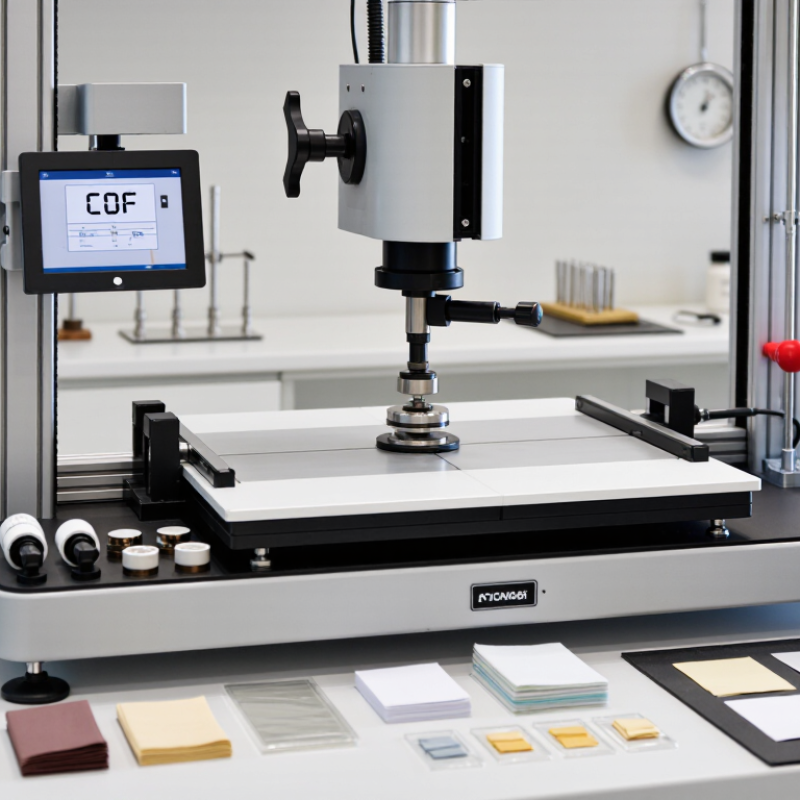
Choosing the right COF testing machine requires more than comparing prices, load ranges, or attractive brochures. Global buyers need dependable friction data for packaging films, paper, textiles, labels, and other materials. A suitable instrument measures static and kinetic coefficients of friction with stable force control and repeatable movement. It should also support recognized methods, such as ASTM D1894 or ISO 8295, when those standards match the application.

In practical laboratory work, small details can change the result. A dusty film surface, uneven sample cutting, or incorrect sled alignment may produce misleading readings. Temperature and humidity matter too. Reliable testing begins with conditioned specimens, a clean platform, and documented operating procedures. Look for a COF testing machine with clear software, adjustable test speed, accurate sensors, and traceable calibration records. A sturdy frame helps reduce vibration during measurement. Responsive technical support is equally valuable, especially when buyers operate across different regions and languages.

No machine is perfect.

Even advanced equipment depends on careful handling and regular verification. Buyers should question vague claims about “high accuracy” and request test reports, calibration evidence, warranty terms, and spare-parts availability. The best choice is not always the most expensive model. It is the machine that fits the material, testing standard, sample size, workload, and laboratory skills. This guide examines key specifications, operating experience, supplier reliability, and common purchasing mistakes. Some recommendations may need refinement as materials and standards change. That limitation deserves honest attention.
Top COF Testing Machine for Global Buyers

COF Basics: Static and Kinetic Friction Coefficients (μs and μk)

A COF testing machine helps global buyers understand how packaging, films, labels, and coated surfaces behave during contact. The coefficient of friction, or COF, compares the force needed to move one surface against another. Static friction coefficient (μs) measures the force required to start movement. Kinetic friction coefficient (μk) measures resistance after sliding begins. In practical testing, μs is usually higher than μk, although real materials can behave differently.

For example, a film may need a sharp initial pull before it moves, then slide more smoothly. This difference can affect stacking, feeding, sealing, and high-speed packing. A reliable test should control load, speed, temperature, humidity, and specimen direction. Small changes matter. A dusty surface can distort results. So can uneven cutting. Operators should condition samples before testing and record every setting. Repeat measurements are essential, but they do not remove every uncertainty.

Tips: Test both machine and transverse directions when the material is anisotropic. Keep contact surfaces clean, and avoid touching the test area. Review unusual values instead of deleting them. They may reveal coating variation, storage damage, or a method problem. A good report lists μs, μk, test conditions, sample details, and repeatability. This makes results easier to compare across laboratories and production sites. Our own testing experience suggests that “stable” results still deserve periodic verification.

Global Standards: ASTM D1894 and ISO 8295 Testing Requirements

Top COF Testing Machine for Global Buyers

Global packaging buyers need results that travel across laboratories. ASTM D1894-24 and ISO 8295:1995 are key references for plastic film and sheeting. Both evaluate static and kinetic coefficients of friction, but their settings are not identical. ASTM D1894 commonly uses a 200 g sled and a 150 mm/min travel speed. ISO 8295 commonly uses a 200 g sled and a 100 mm/min speed. Small differences can change the result.

A reliable COF testing machine should control speed, load, travel distance, and environmental conditioning. ASTM and ISO methods typically use 23°C and 50% relative humidity. The instrument should record force continuously, not only display a final value. This helps laboratories identify stick-slip behavior, surface contamination, and unstable coatings. Smithers’ flexible-packaging market outlook also identifies machinability and friction control as important performance factors. Yet, a perfect-looking result can still be misleading. Film direction, aging time, and operator handling may influence the data.

Tips: Verify the standard before testing. Use separate specimens for machine and transverse directions. Record temperature, humidity, film age, sled condition, and test speed. Repeat testing when results vary widely. Sometimes, the machine is not the problem. The method may be.

Top COF Testing Machine for Global Buyers - Global Standards: ASTM D1894 and ISO 8295 Testing Requirements

Comparative data table for selecting a coefficient-of-friction testing machine for plastic film and sheeting. Values below summarize commonly specified requirements in ASTM D1894 and ISO 8295; the current standard edition and laboratory procedure should always be verified before compliance testing.

Evaluation Dimension ASTM D1894 Requirement ISO 8295 Requirement Machine Selection Consideration
Test scope Determination of static and kinetic coefficients of friction of plastic film and sheeting. Determination of the coefficients of friction of plastic film and sheeting, including static and sliding friction behavior. Select a system designed specifically for flexible films, sheets, laminates, and similar flat materials.
Measured outputs Static COF (μs) and kinetic COF (μk). Static COF (μs) and kinetic COF (μk). The instrument should display both values separately and retain the force-versus-distance curve.
Basic calculation COF is calculated as friction force divided by the normal force: μ = F/N. COF is calculated as friction force divided by the normal force: μ = F/N. Software should automatically calculate peak static friction and the average sliding friction region.
Sled mass Approximately 200 g; ASTM D1894 specifies the applicable sled mass and tolerance for the method. Approximately 200 g; ISO 8295 specifies a 200 g sled for the standard configuration. Use a calibrated sled with documented mass, level contact, and a replaceable specimen-facing surface.
Sled contact area Standard sled contact dimensions are approximately 63.5 mm × 63.5 mm. Standard sled contact dimensions are approximately 63.5 mm × 63.5 mm. The contact surface should remain flat and parallel to the test platform throughout the run.
Test motion Horizontal translation of the sled over a stationary or opposing film surface. Horizontal translation of the sled over a stationary or opposing film surface. A motorized horizontal drive provides more consistent speed and reduces operator influence.
Reference test speed Common ASTM D1894 configuration: approximately 150 mm/min. Common ISO 8295 configuration: approximately 100 mm/min. Choose a machine with programmable speed so one platform can run both methods without mechanical modification.
Friction-force measurement Requires a low-friction horizontal test surface and a force-measuring system capable of capturing the initial peak and sliding force. Requires a low-friction horizontal test surface and force measurement during the complete sled movement. Prefer a calibrated load cell with stable zeroing, low noise, suitable overload protection, and digital data acquisition.
Specimen pairing Can be used for film-to-film or film-to-specified-surface evaluations, depending on the laboratory procedure. Typically evaluates the friction between two surfaces of plastic film or sheeting, with the contact orientation recorded. Provide clear specimen-orientation controls for inside-to-inside, outside-to-outside, and inside-to-outside testing.
Specimen handling Specimens should be clean, flat, free from visible contamination, and prepared according to the applicable method. Specimens should be clean, flat, free from visible contamination, and conditioned according to the applicable method. A smooth specimen table, alignment guides, and quick clamping help prevent wrinkles and lateral movement.
Environmental control Testing and conditioning are generally associated with the standard laboratory atmosphere of approximately 23 °C and 50% relative humidity, unless otherwise specified. Testing and conditioning are generally associated with the standard laboratory atmosphere of approximately 23 °C and 50% relative humidity, unless otherwise specified. For global comparison, record temperature, relative humidity, conditioning time, film age, and surface treatment history.
Surface condition Results are sensitive to contamination, additives, migration, moisture, and surface treatment. Results are sensitive to contamination, additives, migration, moisture, and surface treatment. Use lint-free cleaning procedures and avoid touching the active test areas before measurement.
Data acquisition Should capture the initial force peak and the stabilized force during sliding. Should capture the initial force peak and the stabilized force during sliding. Recommended functions include force-time or force-distance curves, automatic averaging, raw-data export, and test traceability.
Repeat testing Multiple measurements are normally used to establish a representative result and assess variation. Multiple measurements are normally used to establish a representative result and assess variation. Define the number of valid runs, discard rules, orientation sequence, and reporting precision in the laboratory SOP.
Calibration needs Force measurement, sled mass, travel speed, and displacement should be verified at planned intervals. Force measurement, sled mass, travel speed, and displacement should be verified at planned intervals. Choose a machine with calibration access, traceable weights, speed verification, and documented maintenance records.
Reporting units COF is reported as a dimensionless ratio, commonly using μs and μk notation. COF is reported as a dimensionless ratio, commonly using μs and μk notation. Report the standard used, test direction, specimen surfaces, conditioning, sled mass, speed, individual results, and mean values.
Buyer priority Strong control of the approximately 150 mm/min test speed and ASTM-specific procedure settings. Strong control of the approximately 100 mm/min test speed and ISO-specific procedure settings. A dual-standard platform with programmable parameters is generally more practical for laboratories serving multiple markets.

Technical note: Coefficient-of-friction results are comparative measurements rather than universal material constants. Film formulation, additives, corona treatment, surface roughness, orientation, aging, contamination, temperature, humidity, and specimen conditioning can significantly affect the result.

Machine Selection: Load Capacity, Sled Size, and 0.01 COF Resolution

Top COF Testing Machine for Global Buyers

Machine Selection: Load Capacity, Sled Size, and 0.01 COF Resolution

Selecting a COF testing machine starts with the material, not the catalog photograph. Load capacity should cover expected friction forces with useful headroom. A machine rated too high may sacrifice sensitivity. One rated too low can distort results or overload its drive system. In practical laboratory work, compare the working range with actual film, paper, coating, or sheet samples. Include fixture weight and unexpected resistance. Check whether the stated capacity covers the complete test setup.

Sled size controls contact area and pressure distribution. Match it to the relevant test method and sample width. A small sled may react strongly to wrinkles, dust, or edge effects. A large sled may hide local surface variation. The 0.01 COF resolution sounds precise, but resolution is not accuracy or repeatability. Ask for calibration evidence, measurement uncertainty, and repeated-test data. Review the software’s rounding rules. A displayed 0.01 value can still conceal unstable readings. I have seen clean results change after better sample conditioning. That limitation deserves attention. Not always.

Tips: Verify load range, sled dimensions, calibration intervals, and environmental controls before purchase. Request a sample report with raw readings. Test your own materials when possible. Confirm the instrument supports your required method and reporting format. Small setup differences can matter.

Material Testing: Films, Paper, Foils, Coatings, and Laminates

Top COF Testing Machine for Global Buyers

Material Testing: Films, Paper, Foils, Coatings, and Laminates

A coefficient of friction (COF) testing machine measures how materials slide against each other. This matters when packaging films move through rollers, seals, or filling lines. Paper can slip too easily, while coated sheets may drag and wrinkle. Foils often need careful control because their smooth surfaces can produce unstable readings. Laminates add another challenge. Their outer layers may behave differently under pressure.

Reliable testing starts with controlled preparation. Condition samples at a stable temperature and humidity before testing. Keep the contact surfaces clean and free from fingerprints, dust, and adhesive residue. Use defined specimen sizes, consistent sled weight, and a fixed travel speed. Record both static and kinetic COF when the applicable method requires them. Standards such as ASTM and ISO methods can support repeatable procedures, but operators must follow the selected method precisely.

Small errors matter. A slightly bent sample can change the result. Excessive pressure may also create unrealistic contact conditions. Experienced technicians should inspect alignment, verify calibration, and repeat unusual measurements. Even then, results are not perfect. Material texture, coating thickness, and storage history can influence performance. A useful report should include sample direction, surface details, conditioning time, test speed, and environmental data. These details help engineers compare batches and identify process changes with greater confidence.

Top COF Testing Machine for Global Buyers

Material Testing: Films, Paper, Foils, Coatings, and Laminates

The chart presents representative dry-test static coefficient of friction (COF) ranges for commonly tested flexible materials. Actual results depend on surface finish, additives, coating formulation, pressure, sliding speed, temperature, humidity, and the material pairing. COF is dimensionless; lower values generally indicate easier sliding.

Buyer Checklist: Calibration, Repeatability, Safety, and Data Export

Top COF Testing Machine for Global Buyers

Buyer Checklist: Calibration, Repeatability, Safety, and Data Export

A reliable COF testing machine starts with traceable calibration. Ask for calibration records, reference materials, and the recommended verification interval. In practical testing, I check the instrument before each batch, not only during annual service. Small drift can change packaging decisions. Calibration alone is not enough.

Repeatability deserves close attention. Run identical samples under controlled speed, load, temperature, and surface condition. Compare the results across several cycles. A narrow data range suggests stable performance, but an unusually perfect result may deserve investigation. Real materials vary. That lesson is easy to forget. Review the standard deviation, not only the average value. Confirm whether the software separates static and kinetic friction results clearly.

Safety features should protect operators during setup and testing. Look for guarded moving parts, emergency stopping, stable sample fixtures, and clear operating instructions. The control panel should remain understandable when wearing gloves. Export functions also matter for global buyers. Confirm that results can be saved in common formats, with timestamps, test settings, sample identification, and operator details. Data without conditions is weak evidence.

Before purchase, request a demonstration using a material similar to your application. Check how quickly a new operator can create a valid test. I have found that complicated workflows encourage skipped checks. That is a design problem, not merely a training problem. Choose equipment that supports careful work every day.

Go to Top