
Material Testing Blog

HomeMaterial Testing Blog

How to Choose the Right Universal Tensile Machine for Your Needs?

Selecting the right universal tensile machine requires a clear understanding of your testing needs. These machines are essential in various industries, including construction, manufacturing, and materials research. They measure the tensile strength and deformation of materials accurately. Choosing the wrong machine can lead to poor results and wasted resources.

When evaluating options, consider factors such as capacity, accuracy, and the types of materials you will test. Each machine has its strengths and weaknesses, making it crucial to align your selection with specific applications. For example, universal tensile machines can vary significantly in size and features. A larger machine might provide greater testing accuracy, but it may also occupy more space.

Moreover, think about the support and training offered by providers. An authoritative supplier will offer valuable insights into the machine's operation. Investing in proper guidance can enhance your results dramatically. This decision is important; it impacts both the reliability of your tests and the credibility of your findings.
How to Choose the Right Universal Tensile Machine for Your Needs?

Understanding Universal Tensile Machines and Their Applications

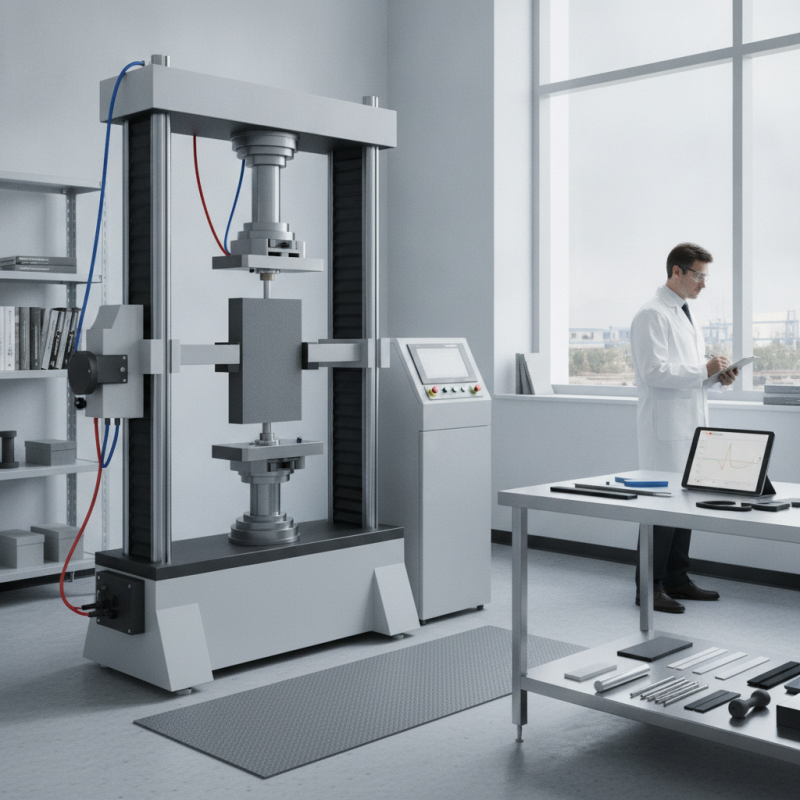
Universal tensile machines are crucial for various industries. They test materials by pulling them to the point of failure. This process helps determine tensile strength, ductility, and other key properties. Understanding the applications of these machines can guide your choice.

These machines are widely used in construction, aerospace, and manufacturing. They help ensure materials meet safety standards. Engineers rely on accurate data to make informed decisions. However, not all machines suit every application. Choosing the wrong one can lead to inaccurate results. Reflecting on usage scenarios can provide insights. Consider factors like material type, strength, and intended tests.

Selecting the right universal tensile machine requires careful thought. Each machine has unique specifications and capabilities. Assessing your needs can improve precision in testing. It is important to weigh the pros and cons of each option. Investing time in research often leads to better outcomes. Your decision impacts the quality of your projects. Remember, testing is not just a formality; it is essential for safety and performance.
Key Factors to Consider When Selecting a Tensile Testing Machine

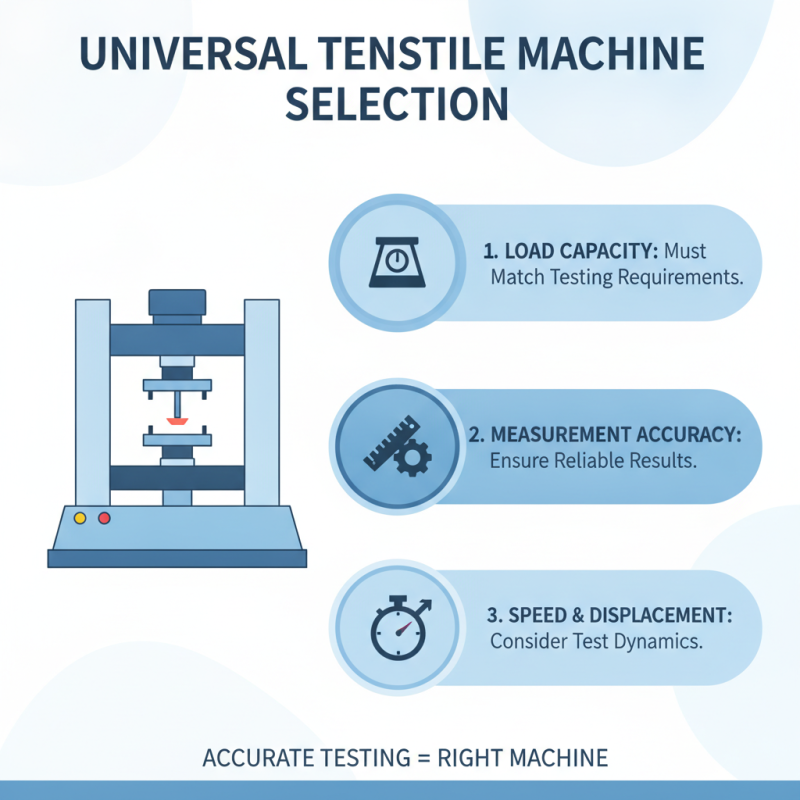
When selecting a universal tensile machine, various factors demand attention. One significant aspect is the machine's capacity. It should match or exceed the maximum tensile strength of your materials. Consider the materials you frequently test. Different machines cater to different requirements. Make sure the chosen machine can handle both your current and potential future testing needs.

Another crucial factor is the machine's accuracy and precision. A high-quality tensile testing machine yields reliable results. Check for calibration standards and verification processes. It’s important for any lab to ensure consistent testing accuracy. Look for machines with user-friendly interfaces. This can simplify operation and reduce errors during tests.

Don’t overlook the importance of customer support and service. Even the best machines may require maintenance. Ensure that reliable after-sale service is available. It is beneficial to hear from others who have used the product. Their reviews can provide insights that might help in your decision-making process. Choose wisely; making a hasty choice can lead to regrets later.

Evaluating the Specifications of Universal Tensile Machines

How to Choose the Right Universal Tensile Machine for Your Needs?

When selecting a universal tensile machine, evaluating specifications is crucial. Look for the machine's load capacity. It should match your testing requirements. A machine with too low a capacity may not deliver accurate results.

Consider the testing speed. Different materials require varied speeds for tensile testing. A machine with adjustable speed settings provides flexibility. Features like strain measurement and displacement control add value. These augment the precision of your tests.

Pay attention to the software that accompanies the machine. Intuitive software enhances user experience. It can simplify data collection and analysis. However, some software can be complicated. This complexity may hinder productivity. Lastly, think about the machine's footprint. Space may be a limiting factor in your lab. A compact design can optimize your workspace.

Comparing Different Brands and Models in the Market

When choosing a universal tensile machine, it's vital to compare various brands and models. The market offers a wide range of machines, each with distinct specifications. According to recent industry reports, tensile machines can vary in capacity from a few hundred pounds to over 300,000 pounds. Selecting the right one helps ensure accurate testing results.

Many machines are designed with various features, such as digital controls and advanced load cells. These features improve reliability and precision in measurements. Some models excel in flexibility, allowing for multiple test types. A study by an industry research firm noted that over 65% of laboratories prioritize versatility in their testing equipment. This statistic highlights the importance of choosing a machine that meets diverse testing requirements.

It's important to consider user feedback and expert reviews. Some machines may have outstanding specifications but fail in real-world application. Engaging with experienced operators can provide insights into long-term reliability and ease of use. Moreover, not every high-capacity machine is ideal for every application. Make sure to evaluate your specific needs carefully to avoid costly mistakes in your purchase.

How to Choose the Right Universal Tensile Machine for Your Needs?

Model Max Load (kN) Test Speed (mm/min) Data Acquisition Price Range ($)
Model A 100 5 - 500 USB, Ethernet $2,500 - $3,000
Model B 150 1 - 300 USB, Wireless $3,000 - $3,500
Model C 200 10 - 600 RS232, USB $4,000 - $5,000
Model D 250 1 - 400 Ethernet, Wireless $5,500 - $6,500

Budget Considerations for Purchasing a Universal Tensile Machine

How to Choose the Right Universal Tensile Machine for Your Needs?

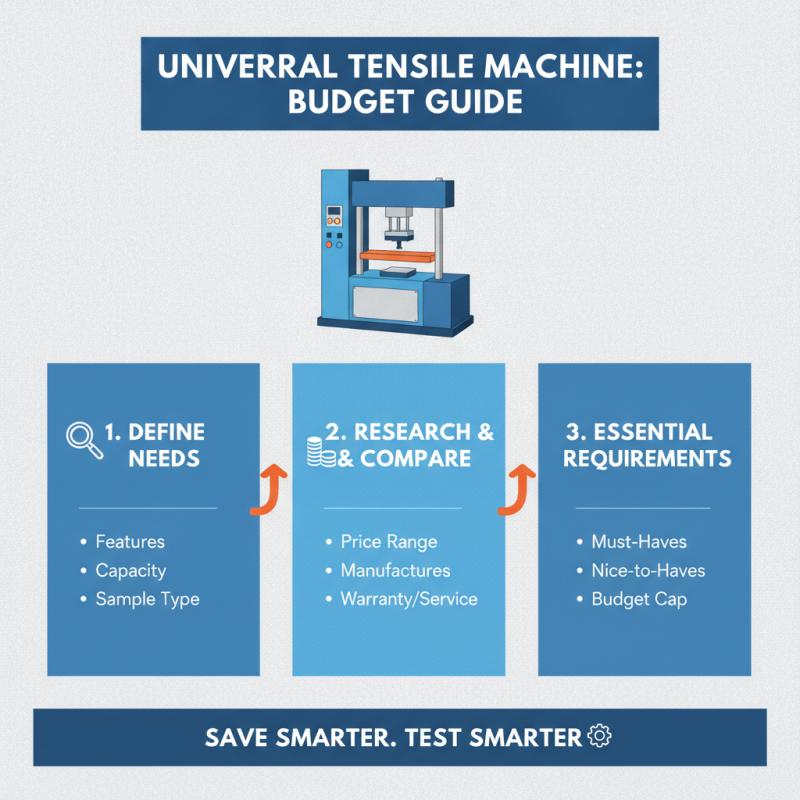
When considering the budget for a universal tensile machine, the first step is to define your specific needs. The prices can vary widely based on features and capacities. Make a list of your essential requirements. It helps narrow down options that fit within your budget.

**Tips:** Always account for additional costs. Installation and maintenance can add up quickly. Some machines may require compatible accessories, which can push your expenses beyond the initial price.

Consider not only the upfront cost but also the long-term value. Cheaper machines may save money initially but could incur higher operating costs. Researching the lifespan and reliability of a product is vital. Compare different suppliers and their offerings.

**Tips:** Look for machines with good reviews. Engaging with professionals and industry forums can provide insights. Explore used equipment as an alternative, but ensure it meets your quality standards. Scrutinizing warranties and support options is crucial for lasting satisfaction.

Go to Top