
Material Testing Blog

HomeMaterial Testing Blog

2026 Top Spring Testing Machine Types for Global Buyers

Global spring manufacturers are entering 2026 with tighter quality targets and shorter production cycles. In this environment, choosing the right spring testing machine affects both product safety and manufacturing efficiency. Compression, tension, torsion, fatigue, and multifunctional systems serve different engineering needs. One machine rarely handles every spring design well.

Industry reports support this shift. MarketsandMarkets’ recent materials testing market analysis identifies automation, software integration, and connected quality systems as major development themes. Grand View Research also reports continued testing demand from automotive, aerospace, electronics, and industrial equipment manufacturers. These sectors require traceable force, displacement, torque, and cycle data. A spring used in a vehicle seat may need thousands of repeated cycles. A small electronic contact spring may require highly sensitive force measurement at only a few millimeters of travel.

Standards remain equally important. ISO 22705-1 provides guidance for compression spring testing, while ASTM E4 supports verification of force-measuring systems. Buyers should also examine calibration intervals, sensor capacity, fixture design, software export formats, and operator training. A low-cost machine can become expensive when fixtures fail or data cannot enter a quality system. That lesson is easy to overlook.

Accuracy matters most.

This 2026 guide compares leading spring testing machine types for global buyers. It considers laboratory research, factory inspection, and production-line verification. However, market rankings are not universal. A machine praised in one report may perform poorly under another buyer’s temperature, speed, or fatigue requirements. Careful specification review remains necessary, even when supplier claims appear convincing.
2026 Top Spring Testing Machine Types for Global Buyers

What Is a Spring Testing Machine and Why It Matters in 2026

2026 Top Spring Testing Machine Types for Global Buyers

What Is a Spring Testing Machine and Why It Matters in 2026

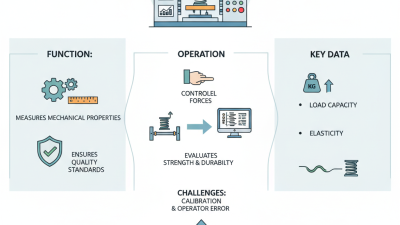
A spring testing machine measures how a spring reacts to force, movement, torque, or repeated cycling. Common systems test compression, tension, torsion, and fatigue performance. A load cell records force while a displacement sensor tracks travel. The result shows whether a spring meets its design requirements under controlled conditions.

In 2026, reliable testing matters because springs support vehicles, medical equipment, industrial tools, and safety mechanisms. Small errors can cause noise, premature wear, or unstable movement. Modern machines can store test curves, flag abnormal results, and connect data with quality systems. However, automation does not remove every uncertainty. Misaligned fixtures, worn grips, or poor calibration can still distort results. Practical technicians check alignment before each serious test. They also verify the load cell with traceable calibration equipment.

Tips: Choose a machine based on spring type, force range, stroke, cycle speed, and required accuracy. Test the smallest and largest expected loads. Leave safety margin. Review the software before purchase, because clear data is often more valuable than attractive features. A fatigue test may run for thousands of cycles, yet one loose fixture can invalidate the entire record. Keep inspection notes, calibration dates, and operator settings together. This simple habit improves repeatability, even when the testing plan is not perfect.

Main Types of Spring Testing Machines for Global Applications

2026 Top Spring Testing Machine Types for Global Buyers

Spring testing machines are not one universal product. Global buyers usually choose compression, tension, torsion, fatigue, or universal systems. Compression testers measure load, height, and rate changes in coil springs. Tension machines examine extension springs and wire-form components. Torsion systems capture torque and angular movement in hinge or seat mechanisms. Fatigue rigs repeat controlled cycles, revealing failures that one load can miss. Universal frames offer flexibility, but fixtures can become the weak point. That trade-off matters.

The World Steel Association reported 1.89 billion tonnes of crude steel production in 2023. This volume signals a broad material base, not automatic demand for one tester. The International Federation of Robotics reported 541,302 industrial robot installations worldwide in 2023. This supports automated inspection, especially where repeatability matters.

Real selection depends on spring geometry, force range, stroke, cycle frequency, and temperature. ISO 7500-1 defines force-verification practices for testing machines. ASTM E4 provides another recognized framework for force calibration.

Buyers should request traceable calibration records, fixture drawings, software logs, and uncertainty values. Numbers alone are insufficient.

Compression testers suit rapid height-load checks at incoming inspection. Electromechanical universal systems fit laboratories comparing several spring designs. Hydraulic fatigue machines may handle high loads, yet they need careful thermal control.

Measure the actual spring, not only its catalog specification. Record seating, friction, coil contact, and alignment. Small errors become expensive after thousands of cycles.

One practical lesson remains uncomfortable: a cheap fixture can distort excellent data. Even experienced teams sometimes understate uncertainty.

How Spring Testing Machines Measure Force, Load, and Performance

2026 Top Spring Testing Machine Types for Global Buyers

Spring testing machines measure more than a single force value. They show how a spring reacts under controlled movement, repeated loading, and changing displacement. A load cell records force while the crosshead moves at a selected speed. The system then links force to compression or extension distance. This creates a force-displacement curve for technical review.

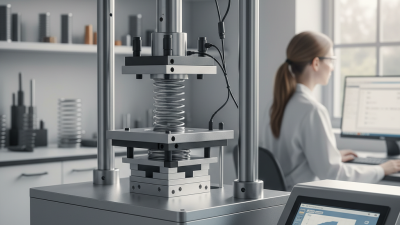
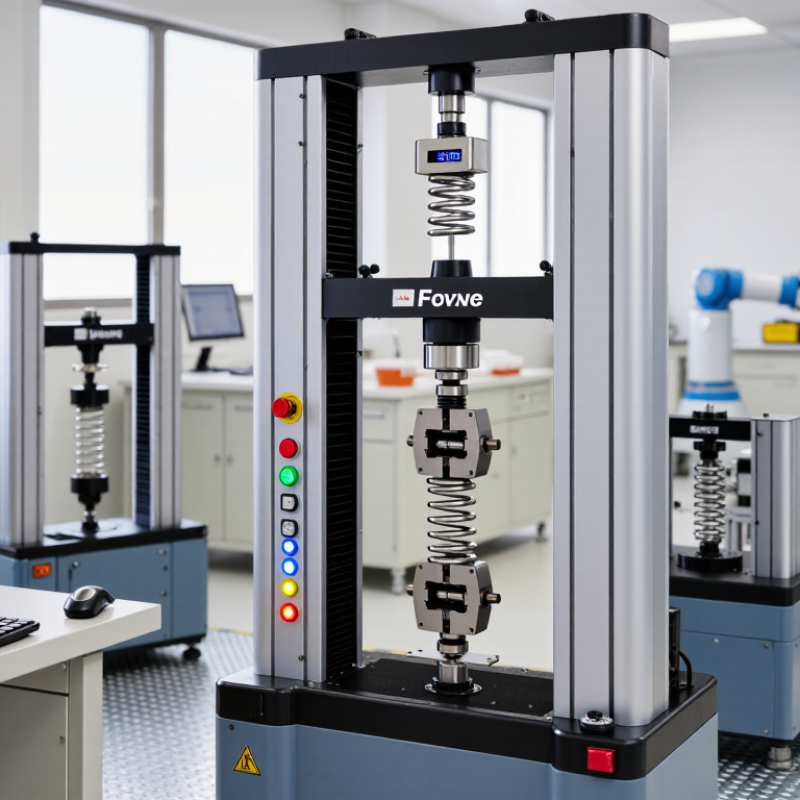
In a practical laboratory, an operator places the spring between polished plates or suitable hooks. The machine applies compression or tension gradually. Software records peak load, working load, travel, and return behavior. For compression springs, the test may reveal coil contact or unstable buckling. For extension springs, it can expose weak hooks or uneven resistance. Small alignment errors matter.

Calibration must match the expected measurement range. A sensor rated too high may hide small force changes. A sensor rated too low may overload. Temperature, fixture friction, and test speed can also influence results. These details are easy to overlook.

Repeatability is the real test.

Experienced technicians often run several cycles, not one. They compare curves and inspect permanent deformation after unloading. A result can look precise but still be misleading if the spring was mounted poorly. This is where professional judgment remains important. Automated data helps, but it does not replace inspection, traceable calibration, and clear test records for buyers in different markets.

Key Specifications Global Buyers Should Compare

2026 Top Spring Testing Machine Types for Global Buyers

Global buyers should compare machine capability before comparing price. Compression testers suit helical compression springs, while tension testers measure extension force and travel. Torsion systems record torque, angle, and return behavior. Fatigue machines add repeated loading, often from thousands to millions of cycles. The 2024 Materials Testing Market report by MarketsandMarkets estimates the sector could grow from about USD 7.3 billion in 2024 to USD 10.4 billion by 2029. This growth increases equipment choice, but not always testing quality.

Load Capacity and Test Accuracy Load capacity must match the spring’s working range, not only its maximum force. A 10 kN frame may perform poorly on a small spring. Check load-cell accuracy, resolution, stroke, test speed, and sampling rate. For fatigue work, confirm cycle control, emergency stopping, fixture alignment, and heat management. ASTM E4 supports verification of force-measuring systems, while ISO/IEC 17025 emphasizes traceable calibration and measurement uncertainty. These details matter during supplier audits.

Data, Software, and Practical Evaluation Digital reports should export raw force-displacement data, calibration records, and operator information. Ask whether the software handles compression, tension, and torsion formulas without manual conversion. That feature sounds minor. It can prevent expensive errors. Environmental control also deserves attention, especially when springs operate below freezing or above 100°C. Larger capacity is not automatically better. A machine can still produce weak data if fixtures bend or the spring tilts. My own purchasing preference would include a practical trial, because brochures rarely reveal setup difficulty. Forecast figures also vary between reports, so buyers should verify assumptions before approving a budget.

How to Select, Operate, and Maintain a Spring Testing Machine

Choosing a spring testing machine starts with the spring’s working range, not the catalogue image. Match maximum load, displacement, test speed, and spring dimensions to your actual samples. Compression, tension, and torsion springs may require different fixtures. For global purchasing, request calibration records traceable to recognized standards. Confirm voltage, software language, data export, and local service support before ordering.

During operation, inspect the frame, grips, cables, and emergency stop. Place the spring centrally and align it with the loading axis. Even a small tilt can create misleading force readings. Set a gradual loading rate and use suitable travel limits. Record temperature, sample identification, preload, and measured values. A clean test report should allow another technician to repeat the procedure. Do not rely only on automatic results.

Maintenance is often less dramatic than expected. Wipe oil and metal dust from contact surfaces after testing. Check fixture wear, bolts, guide columns, and sensor connections each week. Keep the machine level and protect it from humidity. Schedule calibration at defined intervals, or sooner after overload or repair. In practice, a perfect procedure rarely survives a busy shift. That is why simple checklists matter. One missed alignment check can waste a full batch of springs. Review unusual curves instead of deleting them, because they may reveal fixture friction, material variation, or operator error.

Go to Top