Top 10 Universal Testing Machines Buyers Should Consider?
In the world of material testing, choosing the right universal testing machine is critical. Experts emphasize that investing in quality equipment can significantly impact accuracy and efficiency. Dr. Emily Chen, a material testing consultant, once stated, "A reliable universal testing machine is the backbone of successful material analysis."
There are numerous options available, which can be overwhelming. Buyers should consider several factors such as load capacity, software integration, and ease of use. Selecting the appropriate machine requires careful thought and understanding of specific testing needs. A machine that works well for one application may not suit another.
While many manufacturers promise precision, not all deliver. Buyers often face challenges in terms of support and maintenance after the purchase. It's important to reflect on these aspects before making a decision. Taking the time to evaluate different models can lead to better long-term satisfaction and results in testing endeavors.

Overview of Universal Testing Machines and Their Applications
Universal testing machines (UTMs) are vital in various industries. They evaluate the mechanical properties of materials, ensuring safety and performance. In 2022, the global market for UTMs reached $800 million, with estimates predicting growth to $1.2 billion by 2028. This increase reflects rising demand across automotive, aerospace, and construction sectors.
UTMs measure tensile strength, compression, and other properties. This information is crucial for engineers and manufacturers. They assess raw materials and finished products, ensuring reliability. A well-designed testing machine can help identify weaknesses in materials before they are used in critical applications. Proper data collection and analysis enhance decision-making processes.
Tips: Regular calibration is essential for accurate results. Understand the specific requirements of your testing needs. Training staff on operating procedures improves consistency in testing. Stay updated on industry standards to ensure compliance. Regularly review and update testing methods to adapt to new materials and technologies.
Key Features to Look for When Purchasing Universal Testing Machines
When investing in a universal testing machine, several key features are crucial. First, the machine's load capacity significantly impacts its usability across various materials. According to industry reports, machines that accommodate a range from 1 kN to over 1,000 kN offer versatility. However, many buyers underestimate their future testing needs.
Another critical aspect to consider is the machine's software integration. A user-friendly interface and real-time data analysis can enhance testing accuracy. Reports indicate that systems with advanced software can improve testing efficiency by up to 30%. It’s essential to look for machines that allow easy upgrades to stay competitive in a rapidly evolving field.
Calibration accuracy cannot be overlooked. Many machines exhibit variations in test results due to poor calibration. Regular maintenance and verification against standards can ensure reliability. Yet, often, companies prioritize features over this essential need, exposing themselves to potential compliance issues. Always prioritize machines that provide detailed calibration features and performance tracking.
Top 10 Leading Brands of Universal Testing Machines and Their Offerings
When choosing a universal testing machine, buyers should explore leading brands and their offerings. The global market for universal testing machines is projected to grow at a CAGR of 6.5% through 2027. This growth underscores the demand for accurate material testing technologies. Key suppliers often focus on performance, versatility, and compliance with industry standards.
Several dominant brands stand out in this sector. They offer machines capable of tensile, compression, and bend testing. Some models provide advanced features like touchscreen interfaces and data analytics. These enhancements allow for better user experience and improved results in testing accuracy. Additionally, industry reports highlight the importance of durability and precision in machine selection.
Tips: When selecting a machine, assess the type of materials you frequently test. It might be beneficial to choose a model that accommodates a variety of materials. Take time to review technical specifications and performance data. Sometimes, an affordable option may lack essential features. Prioritize machines that offer a solid warranty and after-sales support. These can save you from future headaches related to maintenance and repairs.
Pricing Factors and Budget Considerations for Universal Testing Machines
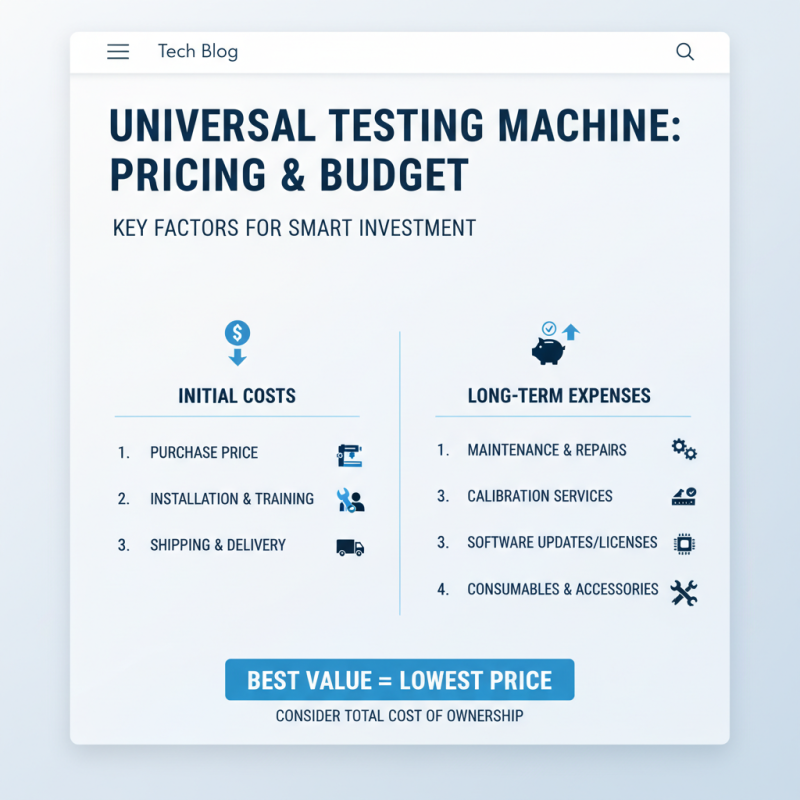
When considering universal testing machines, pricing is a key factor. Buyers should assess both initial costs and potential long-term expenses. The most affordable option may not always provide the best value over time. Additional costs can include maintenance, calibration, and software updates.
**Tips:** Look for machines that offer a good warranty. This can save you money on repairs. Also, inquire about training costs. Knowledgeable staff can make a significant difference.
Budget considerations should include specific testing needs. Machines vary in functionality, and some features may not be necessary for your application. Avoid overspending on unnecessary specifications.
**Tips:** Research your testing requirements thoroughly. This will help prevent purchasing a machine that is too advanced or under-equipped. Regularly evaluate your usage patterns. This can inform future purchasing decisions and budgets.
Maintenance and Support Services for Universal Testing Machines Buyers
When selecting a universal testing machine, maintenance and support services play crucial roles. A 2020 market report indicated that nearly 30% of machine downtime results from inadequate support. Regular maintenance is not just a cost; it enhances machine longevity. Experts suggest that scheduled maintenance can reduce unexpected failures by nearly 25%. Simple checks can prevent severe issues.
Support services often emerge as a deciding factor for many users. An industry survey reported that 70% of buyers prioritize responsive customer service. This can include troubleshooting, software updates, and technician availability. Quick turnaround times on repairs can markedly affect overall productivity. Some users report delays of over three weeks without proper support.
Choosing a supplier with a robust support system is essential. Insufficient support can lead to increased operational costs and affect lab results. Knowledge transfer through training can empower teams to handle minor issues independently. However, not all users are aware of the available training options. Many neglect this aspect, leading to missed opportunities for efficiency improvements.
Top 10 Universal Testing Machines Buyers Should Consider
| Model |
Max Load (kN) |
Testing Speed (mm/min) |
Control System |
Maintenance Services |
Warranty Period (Years) |
| Model A |
100 |
500 |
Digital |
Annual Calibration |
3 |
| Model B |
250 |
700 |
Analog |
On-site Support |
2 |
| Model C |
150 |
600 |
Digital |
Remote Monitoring |
5 |
| Model D |
200 |
400 |
Digital |
Annual Check-up |
3 |
| Model E |
300 |
800 |
Analog |
Comprehensive Service |
4 |
| Model F |
180 |
650 |
Digital |
Flexible Maintenance Plans |
2 |
| Model G |
220 |
500 |
Analog |
Scheduled Maintenance |
3 |
| Model H |
400 |
900 |
Digital |
Extended Warranty Options |
5 |
| Model I |
120 |
450 |
Digital |
On-call Support |
2 |
| Model J |
350 |
750 |
Analog |
Variable Maintenance Options |
4 |