


Material Testing Blog

HomeMaterial Testing Blog

Top China Stamping Press Manufacturers for Global Buyers

China Stamping Press manufacturers now serve automotive, appliance, electrical, and precision hardware buyers worldwide. Their machines shape steel, aluminum, and copper into repeatable parts, from door panels to battery trays. The market is changing quickly. The International Energy Agency reported nearly 14 million electric car sales in 2023, representing about 18% of global car sales. This shift increases demand for accurate forming equipment, especially for lightweight body panels and structural components.

Quality differences remain significant.

This guide examines leading China Stamping Press manufacturers through practical purchasing criteria. These include rated capacity, bed size, slide speed, servo control, automation compatibility, energy use, and after-sales support. It also considers factory certifications, testing procedures, spare-parts availability, and export experience. Reports from the China Machine Tool Industry Association regularly highlight China’s large manufacturing base and continuing development in metal-forming equipment. However, production scale alone does not prove machine quality. A polished showroom can hide weak documentation or inconsistent process control.

Global buyers should request load charts, accuracy records, sample-part results, and references from comparable applications. A 500-ton press may look impressive, yet it may be unsuitable for a delicate progressive-die operation. Real performance appears on the factory floor, where operators inspect die alignment, listen for abnormal vibration, and review maintenance logs. No ranking is perfect. Supplier capabilities can change, and published specifications may require independent verification. The manufacturers discussed here are therefore evaluated as potential partners, not automatically approved vendors. This approach supports safer sourcing, clearer technical communication, and more reliable investment decisions.
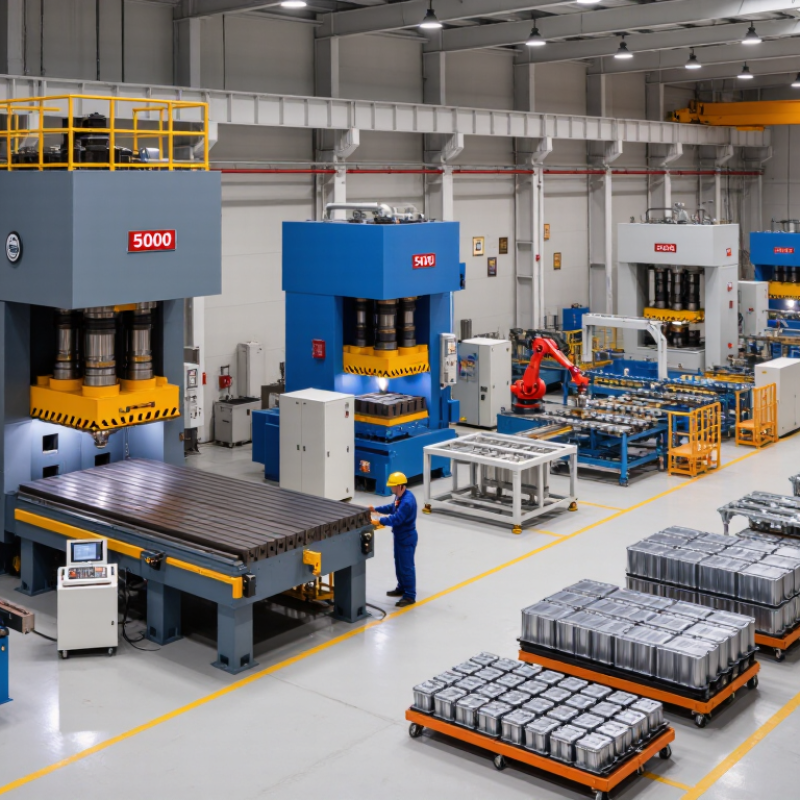
Top China Stamping Press Manufacturers for Global Buyers

Understanding China’s Stamping Press Manufacturing Industry

Top China Stamping Press Manufacturers for Global Buyers

China’s stamping press industry is supported by a large steel and equipment ecosystem. The World Steel Association reported that China produced about 1.02 billion tonnes of crude steel in 2023. That represented more than half of global output. This scale helps suppliers access sheet materials, machining services, and skilled production networks. The industry also serves automotive, appliances, electronics, and construction equipment markets.

Modern factories increasingly combine CNC machining, automated feeding, servo control, and inspection systems. The International Federation of Robotics recorded 276,288 industrial robot installations in China during 2023. This figure does not measure stamping presses directly. However, it shows the country’s expanding automation capacity. Buyers should examine press accuracy, cycle stability, die compatibility, and after-sales engineering support. A polished catalog is not proof of reliable performance.

Tips: Request a video of a complete production cycle. Ask for load testing records, electrical schematics, and maintenance intervals. Confirm whether the supplier can provide sample parts using your material thickness. Check noise, vibration, safety guarding, and emergency-stop performance. The China National Bureau of Statistics and industry testing bodies can support broader market research, but supplier-level evidence remains essential. One weakness remains: published industry data often combines stamping equipment with wider metal-forming machinery. Careful buyers should treat broad market figures as context, not as a guarantee.

Key Types of Stamping Presses Made in China

Chinese stamping press manufacturers produce several machine types for global buyers. Each type suits different production demands, material thicknesses, and part geometries.

Mechanical stamping presses use a flywheel and crankshaft to deliver fast, repeatable strokes. They work well for brackets, covers, washers, and other high-volume parts. Hydraulic presses apply force through fluid pressure. Their adjustable stroke and speed support deep drawing, forming, and thicker sheet processing. Servo presses offer precise motion control and lower energy use during variable production. They are useful when a workshop needs flexible forming sequences and accurate feed timing. Four-column hydraulic presses provide balanced pressure across larger dies. However, the frame quality matters more than appearance.

Tips: Check tonnage, stroke length, shut height, table size, and production speed together. Ask for load testing records, electrical schematics, and spare-parts support. Confirm compatibility with local voltage and safety requirements. A short video of the machine under load can reveal vibration or feeding problems. Do not rely only on polished photographs. A perfect specification sheet is not enough. Request sample production with your actual material, because mild steel and stainless steel may behave very differently. Also review installation guidance, operator training, and maintenance access before placing an order.

Leading Chinese Stamping Press Manufacturers for Global Buyers

Chinese stamping press manufacturers are attracting global buyers through broad capacity, competitive engineering, and flexible production. Their portfolios often cover mechanical, hydraulic, and servo presses from compact workshop models to high-tonnage lines. According to the International Federation of Robotics’ World Robotics 2024 report, China installed 276,288 industrial robots in 2023. This scale supports automated feeding, transfer systems, and in-line inspection for demanding presswork.

Capability still needs verification. During supplier evaluations, buyers should request die-trial videos, load curves, test-part measurements, and maintenance records. A polished sample is not proof. Ask for repeatability data under continuous production, not only during a short factory demonstration.

Grand View Research identifies automotive applications as a major driver of the global metal stamping market, where dimensional stability and cycle consistency matter more than attractive machine paint.

Leading Chinese stamping press manufacturers for global buyers should also provide clear documentation. Check electrical schematics, installation tolerances, spare-part lists, training plans, and remote-service response times. ISO 9001 certification can support process control, but it cannot replace an independent factory audit. Servo systems may reduce energy use and improve stroke control, yet they can increase commissioning complexity. That trade-off deserves honest calculation. Buyers should compare total ownership cost, tooling compatibility, operator safety features, and local compliance requirements before placing an order. Mistakes happen when price becomes the only technical specification.

How to Evaluate Chinese Stamping Press Suppliers

Top China Stamping Press Manufacturers for Global Buyers

How to Evaluate Chinese Stamping Press Suppliers

Evaluating a Chinese stamping press supplier requires more than comparing prices. Review factory experience, production capacity, and the press types they regularly build. Ask for detailed specifications, including tonnage, stroke length, cycle speed, table dimensions, and energy requirements. A serious supplier should explain these figures clearly. Vague answers deserve caution.

Inspect quality systems and technical documentation. Request material certificates, inspection reports, electrical diagrams, and maintenance instructions. Confirm whether each machine receives load testing before shipment. Video evidence helps, but an independent factory audit is stronger. Speak with comparable customers when possible. A polished catalog can still hide weak process control. This is easy to overlook. Also check response speed after technical questions, because after-sales support often reveals operational reliability. Do not judge everything by a low quotation; cheaper parts may increase downtime later.

Tips: Compare at least three suppliers using the same specification sheet. Ask for a sample stamping trial with your material and tooling. Clarify warranty coverage, spare-part availability, installation support, and operator training in writing. Check export packaging carefully, especially moisture protection for long-distance transport. Keep communication records. Some buyers focus heavily on machine appearance and forget software access or replacement sensors. That mistake can become expensive. Finally, allow time for verification; rushed decisions often leave important details unconfirmed.

Top China Stamping Press Manufacturers for Global Buyers - How to Evaluate Chinese Stamping Press Suppliers

Evaluation Dimension What Global Buyers Should Check Practical Benchmark or Requirement Recommended Evidence Suggested Weight
Press Type and Application Fit Confirm that the supplier’s mechanical, hydraulic, servo, or transfer press design matches the forming process, material, die structure, and required production volume. The rated tonnage, stroke, shut height, bolster dimensions, slide area, and speed should match the approved die and part drawings with engineering margin. Equipment datasheet, die-layout review, load calculation, sample-part validation, and technical quotation. 15%
Rated Capacity and Structural Rigidity Assess whether the frame, slide, crankshaft, connecting rods, and guides can withstand continuous loads without excessive deflection or premature wear. The machine should provide the required nominal force within the manufacturer’s specified operating range, rather than relying on short-duration overload capacity. Structural drawings, allowable-load chart, static-load test results, guide-clearance data, and third-party inspection report. 12%
Accuracy and Repeatability Review slide parallelism, shut-height repeatability, feeder accuracy, stroke consistency, and part-to-part dimensional stability. Acceptance limits should be agreed in writing according to the part tolerance, die design, and applicable machine standard; avoid accepting unspecified “high precision” claims. Factory acceptance test, calibrated measurement records, sample run, dimensional inspection report, and agreed tolerance sheet. 14%
Safety and Compliance Verify guarding, emergency stops, two-hand controls, light curtains, safety relays, electrical protection, and documentation for the destination market. The final configuration should satisfy the buyer’s applicable legal and safety requirements, such as machinery, electrical, and workplace-safety rules in the importing country. Risk assessment, circuit diagrams, safety-component list, conformity documentation, inspection certificate, and witnessed safety test. 15%
Automation and Integration Evaluate compatibility with decoilers, straighteners, servo feeders, transfer systems, sensors, die protection, production monitoring, and factory networks. Interface specifications, communication protocols, cycle timing, signal lists, and mechanical connection points should be defined before order placement. Automation layout, I/O list, control architecture, trial-run video, interface drawings, and integration responsibility matrix. 10%
Quality Management and Traceability Check how incoming materials, machining, welding, assembly, painting, electrical wiring, and final testing are controlled and recorded. A documented quality system, controlled drawings, inspection checkpoints, nonconformance process, and serial-number traceability should be available. Quality certificates, inspection plans, material certificates, calibration records, process photographs, and audit findings. 10%
Service, Spare Parts, and Training Assess commissioning support, operator training, troubleshooting capability, spare-parts availability, remote assistance, and local service coverage. The contract should specify response times, warranty scope, exclusions, recommended spare-parts list, training hours, and escalation contacts. Service-level agreement, warranty terms, spare-parts quotation, training plan, service records, and customer references with similar applications. 12%
Delivery, Installation, and Documentation Review manufacturing lead time, export packing, transport dimensions, foundation requirements, installation scope, manuals, and commissioning milestones. The supplier should provide a milestone schedule, shipping dimensions and weights, utility requirements, foundation drawings, and complete operation and maintenance manuals. Project schedule, packing specification, bill of materials, installation method statement, manuals, and pre-shipment inspection checklist. 7%
Total Cost of Ownership Compare purchase price with energy consumption, tooling compatibility, maintenance, consumables, downtime risk, freight, installation, and future upgrades. Use a multi-year cost model instead of comparing equipment prices alone; include all accessories, taxes, shipping, commissioning, and critical spare parts. Itemized commercial offer, energy data, maintenance schedule, spare-parts pricing, operating-cost assumptions, and lifecycle-cost calculation. 5%
Recommended scoring method: Rate each dimension from 1 to 5, multiply the rating by the suggested weight, and request corrective evidence for any category rated below 3. A supplier should not be approved on price alone; technical fit, safety compliance, acceptance testing, service capability, and total cost of ownership should be evaluated together.

Export, Quality, and Compliance Considerations for Buyers

For global buyers, China’s stamping press sector offers broad capacity, but export readiness needs evidence. The World Steel Association reported 1.892 billion tonnes of crude steel production in 2023. That scale supports a strong supply base, yet it does not guarantee consistent press quality. Buyers should request material certificates, dimensional inspection records, and traceable serial numbers. Factory experience matters. A machine may look excellent during a video call, then fail during continuous production.

Quality checks should include frame rigidity, slide parallelism, clutch response, noise levels, and emergency-stop performance. ISO 16092-1 addresses safety requirements for mechanical presses. ISO 12100 supports machinery risk assessment and safeguarding design. The International Labour Organization estimates that nearly three million workers die annually from work-related accidents and diseases. Safety cannot be treated as a final checkbox. It must appear in the design, testing, manuals, and operator training.

Export compliance also requires careful document control. Buyers should confirm the destination’s machinery, electrical, electromagnetic compatibility, and environmental requirements. Depending on the market, conformity assessments, technical files, declarations, or local certifications may apply. Ask for a factory acceptance test with actual tooling and sample parts. Photos are useful, but measurable results are better. Independent inspection can expose weak welds or inaccurate sensors. It adds cost.

Sometimes, that cost prevents a larger loss. A practical contract should define tolerances, spare parts, response times, installation support, and acceptance criteria. One weakness remains common: buyers often compare price before lifecycle risk. That choice deserves reconsideration.

Top China Stamping Press Manufacturers for Global Buyers

Export, quality, and compliance considerations for buyers

The chart shows representative nominal-force ranges commonly associated with major stamping press categories. Actual specifications vary by machine design, stroke, speed, tooling, and application. For export purchases, buyers should also verify ISO 9001 quality systems, CE or UKCA requirements where applicable, electrical safety under IEC 60204-1, risk assessment under ISO 12100, and safety-control requirements under ISO 13849-1.

Go to Top