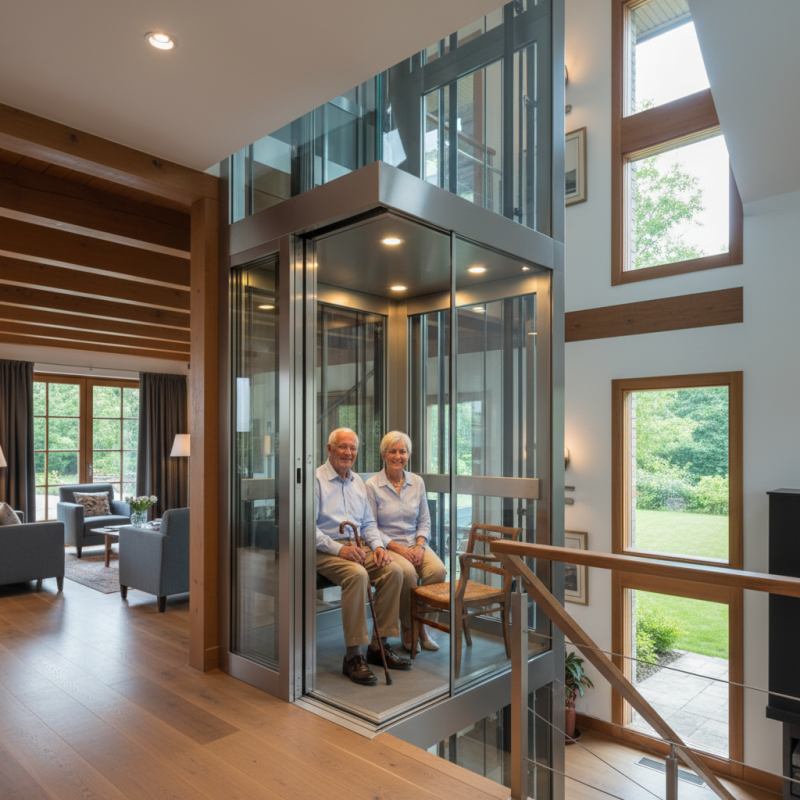
How to Choose the Right Home Elevator for Your Needs?
Choosing the right Home Elevator can feel overwhelming. Many factors come into play. A home elevator is more than just a convenience; it offers accessibility, safety, and comfort.
Consider your needs before making a decision. Think about the layout of your home and the space available for installation. Some models may not fit in tight areas. Look into weight capacity as well, especially if you plan to transport large items. It’s necessary to reflect on the design as well. Does it match your home’s style?
Remember, not all elevators are created equal. Research various brands and designs. You might find one that stands out. Keep in mind that your choice should not only serve immediate needs but also future requirements. Asking the right questions is essential. Will this elevator provide long-term value? Getting to know your options is a journey worth taking.
Factors to Consider When Choosing a Home Elevator for Accessibility
Choosing the right home elevator is essential for enhancing accessibility. Many households face mobility challenges. According to a report by the National Association of Home Builders, about 20% of Americans live with a disability. Elevators can greatly improve their independence.
When selecting a home elevator, consider key factors. The elevator's weight capacity is crucial. Most models can hold between 500 to 1,000 pounds. This capacity should accommodate the user’s needs and any potential equipment. Additionally, the dimensions of the elevator should fit in your home space. A typical residential elevator has a footprint of around 3 feet by 4 feet. Luckily, there are compact models available for smaller locations.
Additionally, energy efficiency is a point of reflection. Hydraulic elevators may use more energy than cable-driven elevators. The U.S. Department of Energy suggests that energy-efficient models can reduce utility bills significantly over time. Think about how often the elevator will be used. Regular usage might justify a higher investment in efficiency. Consider long-term costs versus initial purchases. Accessibility covers many aspects, and so should your choice.
Understanding Different Types of Home Elevators and Their Features
When choosing a home elevator, understanding the different types available is essential. There are primarily two types: hydraulic and pneumatic elevators. Hydraulic elevators use a pump to move fluid and lift the cabin. They are known for their smooth ride and durability. However, they may require a machine room, which can affect your home’s design.
Pneumatic elevators rely on air pressure to move the cabin. They are often more compact and can fit in smaller spaces. Their installation is easier and typically does not need a machine room. However, they may have weight limits and could be noisier during operation.
Another option is the traction elevator. These use cables and pulleys to lift the cabin. They offer energy efficiency and a quieter operation. However, their installation can be complex and require more space, which some homeowners might not have. Each type has its advantages and challenges that require careful consideration. It’s important to reflect on your specific needs and the layout of your home.
How to Choose the Right Home Elevator for Your Needs?
| Elevator Type | Key Features | Capacity (lbs) | Speed (ft/min) | Price Range |
| Hydraulic Elevator | Smooth ride, low noise, ideal for residential use | 1000 - 1500 | 30 | $20,000 - $50,000 |
| Pneumatic Vacuum Elevator | No cables, fast installation, eco-friendly | 350 - 450 | 30 | $35,000 - $60,000 |
| Electric Traction Elevator | High speed, precise control, great for multi-story homes | 1000 - 3000 | 100 | $25,000 - $70,000 |
| shaftless Elevator | Compact design, easy installation, no shaft needed | 500 - 800 | 20 | $15,000 - $40,000 |
| Through-the-Floor Elevator | Space-saving, ideal for homes with limited space | 500 - 900 | 40 | $10,000 - $30,000 |
Evaluating Weight Capacity and Size Requirements for Your Home Elevator
When considering a home elevator, evaluating weight capacity and size is crucial. Industry data shows that most residential elevators accommodate between 750 and 1,500 pounds. Understanding your needs is essential; will you transport just yourself or larger items? Families with mobility devices might need higher capacity.
Size matters as well. Many models fit into a standard space of 36 to 48 inches wide. However, if you have unique architectural features, custom dimensions may be required. Unexpected constraints can arise when assessing existing structures. Measurement errors in tight spaces can lead to costly adjustments.
It's also important to note that while higher weight capacity sounds appealing, it often comes with a higher price tag and may require more maintenance. Regular inspections can be overlooked amid busy schedules. The selection process isn't as straightforward as it appears, and proper planning can save future headaches.
Assessing Installation Options and Space Constraints for Your Home
When selecting a home elevator, assessing installation options and space constraints is crucial. The National Association of Elevator Contractors reports that more than 70% of homeowners encounter space limitations when integrating elevators. It’s essential to measure your available area accurately. A typical residential elevator requires a footprint of at least 5 feet by 5 feet. If your home has narrow hallways or tight corners, consider an innovative design that fits these constraints.
Additionally, the choice between a shaftless elevator and a conventional one can significantly impact installation feasibility. Shaftless options often require less space, making them ideal for smaller homes. They can fit into an existing staircase, which minimizes disruption. The National Elevator Industry, Inc. states that shaftless designs can reduce installation costs by up to 30%. However, not all homes can accommodate them.
Some homeowners might feel overwhelmed by these decisions. It's easy to overlook specific details like ceiling height and the depth required for the elevator. Each of these factors can create unforeseen challenges. Consulting with an architect or elevator professional can provide clarity. Engaging with experts may spotlight issues you haven’t considered, ensuring the elevator meets both aesthetic and functional needs in your home.
Maintenance and Cost Considerations for Long-Term Home Elevator Use
When considering a home elevator, maintenance and cost are crucial factors. The average lifespan of a residential elevator is around 20 years, but this can vary significantly. Regular maintenance plays a vital role in prolonging its lifespan. Industry reports suggest that homeowners should expect to spend about $400 to $800 annually on maintenance services. This cost includes inspections, minor repairs, and adjusting mechanical components.
In terms of upfront costs, a home elevator installation can vary widely. Homeowners might pay anywhere from $15,000 to $100,000, depending on the type and features. For instance, hydraulic elevators tend to be less expensive compared to pneumatic or traction systems. It's also worth noting that unexpected repairs can arise. Some homeowners report spending thousands on emergency repairs, which can lead to stress and budgetary concerns.
Safety is another consideration that can incur costs. Periodic safety inspections may cost around $200 and are essential for compliance with regulations. Ignoring these checks can lead to larger, more expensive issues down the line. Thus, carefully evaluating potential costs, along with planned maintenance, can lead to smarter choices for long-term satisfaction.