


Material Testing Blog

HomeMaterial Testing Blog

China Best Sewer Drain Cameras How to Choose the Right One?

Choosing China’s best Sewer Drain Cameras is not just a matter of comparing screen size or advertised cable length. The right system should suit the pipe diameter, inspection distance, site conditions, and reporting needs. A camera that performs well in a clean, straight pipe may struggle in a wet line with tight bends, standing water, or heavy deposits. Small details matter.

The need for dependable wastewater infrastructure is substantial. The U.S. Environmental Protection Agency’s 2022 Clean Watersheds Needs Survey estimated $630.1 billion in wastewater infrastructure needs over 20 years. This figure concerns U.S. public infrastructure, not camera sales or China’s market. It does, however, underline why accurate inspection and maintenance decisions matter. For buyers comparing Chinese manufacturers, practical checks include camera-head diameter, self-leveling performance, cable pushability, footage counter accuracy, lighting, waterproof ratings, battery life, and local service support. Ask for sample inspection footage and confirm what the warranty covers. Also check whether the system can record clear images when the lens is muddy or the pipe is poorly lit. Specs can look impressive on paper. Field conditions are less tidy. No single model fits every job, and published specifications do not replace a hands-on test. This guide explains how to assess those trade-offs and choose a Sewer Drain Camera that fits the work, not merely the brochure.
China Best Sewer Drain Cameras How to Choose the Right One?

What Sewer Drain Cameras Are and How They Work

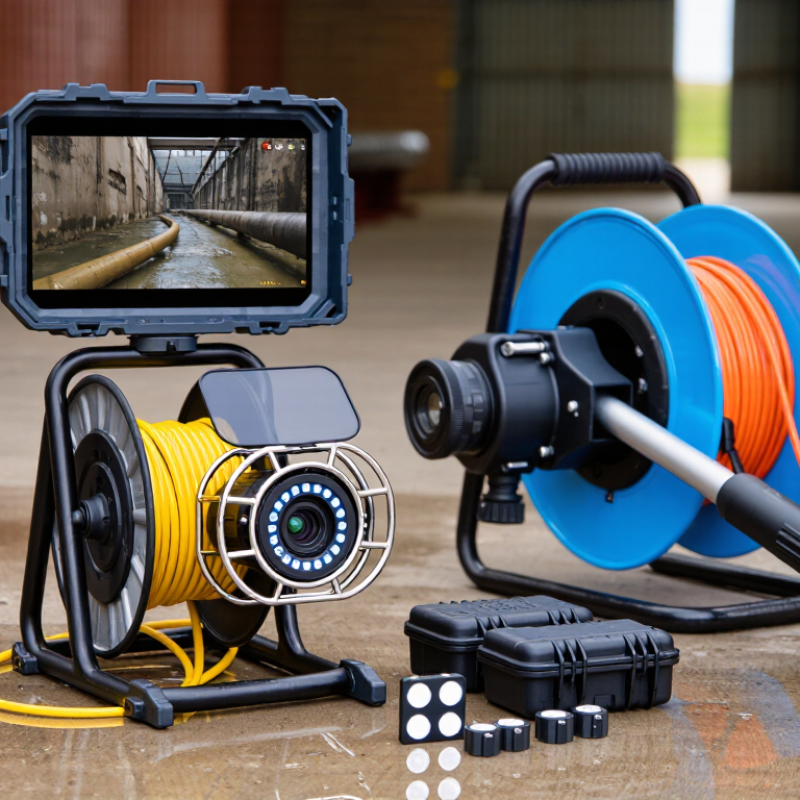
A sewer drain camera is a compact inspection tool with a waterproof camera head attached to a flexible push rod. Small lights around the lens illuminate dark pipe interiors. As the operator feeds the rod through a cleanout or access point, the camera sends live images to a screen. Many systems also show how much cable has entered the pipe, and some can record video or help locate the camera from above ground.

The operator moves the camera slowly, watching for roots, cracks, standing water, displaced joints, or buildup. Distance markers help connect a visible problem to its position in the line. A camera shows the pipe’s interior, but it does not explain every cause. Grease, water, and a dirty lens can obscure details. The picture is useful, not infallible.

Tips: Clean the lens before inspection, advance the rod gently, and note distances when an issue appears. Go slowly. If the image is unclear, pause and try again; rushing can make a minor obstruction look like a major defect. A second viewing angle may help, though interpretation still takes experience.

How to choose a sewer drain camera: Match the camera head and push cable to the pipe’s diameter and access point. The camera sends live video through the cable to a monitor; some systems also include a locator to help find the camera underground.

About the chart: These are common nominal pipe-size ranges, not universal specifications. Actual sizes depend on the plumbing layout and local codes. Check the pipe before selecting equipment.

Which Camera Types Suit Different Inspection Tasks

Camera choice depends on pipe diameter, access, distance, and the defect you need to see. A push-rod camera works well in household drains and short branches. Its flexible cable can pass through bends, while a compact head fits narrow openings. Small lines vary. Check the camera head diameter and cable length before arriving on site; a few extra metres can matter.

For larger pipes or longer runs, a crawler camera offers steadier movement and clearer positioning. Its wheels help cross uneven joints, while a tilting camera head can inspect branch connections and pipe walls. In medium-sized lines with several junctions, a pan-and-tilt camera can reveal cracks that a forward-facing lens might miss. These systems need more setup space, so they may not suit a cramped access point. For quick checks in shallow, open sections, a handheld inspection camera is easier to carry, though its reach and stability are limited.

Match the camera to the inspection, not just the pipe’s advertised size. Look for adjustable lighting, a clear distance counter, and reliable video recording. In wet or dirty lines, glare and debris can hide small defects, even with a capable camera. A short test run helps confirm visibility and cable movement. Sometimes the first choice is wrong. Reassess when bends, standing water, or access conditions differ from the initial estimate.

Which Features Matter Most When Comparing Models

Choosing a sewer drain camera means matching its features to the pipes you inspect. Start with camera-head diameter and cable length: a slim head can pass tighter bends, while a longer push cable reaches farther lines. But extra cable can be harder to control. Image clarity matters, too. Look for adjustable lighting and a monitor that remains readable in a dim work area. A clear image helps reveal cracks, roots, standing water, and offset joints. It cannot identify every cause by itself.

Consider durability and daily handling. A sealed camera head and abrasion-resistant cable are useful around wet, gritty drains. Check the stated water-resistance details rather than assuming “waterproof” covers every condition. A self-leveling view can keep the image upright, though it may take practice. Recording and timestamp options help compare findings later, while battery life should match a typical inspection shift. Test the controls with gloves if possible. Small buttons matter.

Tips: Ask whether the camera fits your usual pipe sizes, and check cable flexibility before buying. Compare sample footage on the actual screen, not just a specification sheet. If you mostly inspect short indoor branches, a very long reel may add weight without adding value. Needs vary, and I would not choose by resolution alone.

How to Assess Chinese Manufacturers and Product Quality

Assess Chinese manufacturers through evidence, not polished catalogues. The U.S. EPA’s 2022 Clean Watersheds Needs Survey estimated $630.1 billion in wastewater infrastructure needs over 20 years. The scale is clear. Yet that figure does not prove any camera will last underground. Ask for serial-number traceability, component specifications, and recent production inspection records. Request a sample unit and inspect the image under low light, not just in a bright showroom. Test cable payout and rewind, connector sealing, and footage transfer. Small details matter.

The American Society of Civil Engineers’ 2021 Infrastructure Report Card described about 800,000 miles of public sewer lines in the United States. For buyers, this means equipment may face long runs, bends, grit, and repeated cleaning cycles. Ask manufacturers how they test pushrod wear and camera-head water resistance, and request the test method and results. A claimed rating alone is not enough. Check whether the stated rating applies to the complete assembled camera, including connectors. Review warranty exclusions and spare-part lead times in writing. ISO 9001 certification can indicate a quality-management system, but it does not guarantee image clarity or field reliability. Some suppliers may resist sharing raw test records; that deserves a second look.

China Best Sewer Drain Cameras: How to Choose the Right One? — How to Assess Chinese Manufacturers and Product Quality

Use this framework to compare suppliers and sewer inspection camera systems. The suggested scores and checks are a practical evaluation method, not a ranking of manufacturers or a claim that every project requires the same specifications.

Assessment Dimension What to Check Evidence to Request or Test Suggested Weight Score
Application Fit Confirm that the camera is intended for the pipe diameters, access points, bends, inspection distance, and working conditions expected in your projects. Provide the supplier with your pipe-size range, typical route length, and job conditions. Ask for the compatible camera-head and reel configurations, then test a representative setup. High 1–5
Camera Head and Image Assess image clarity, lighting, field of view, focus, and visibility in wet or poorly lit pipes. Check whether the head size suits the pipe access and whether centering or self-leveling is needed. Request sample footage from the exact camera configuration. Inspect a test chart or known pipe feature at a realistic distance; confirm what image and lighting functions are included. High 1–5
Water and Impact Protection Check the stated ingress-protection rating for the camera head and other relevant components. Do not assume that the monitor, connectors, reel, and camera head share the same rating. Request the rating and supporting test documentation for the exact model and component. Where an IP rating is claimed, check that the report identifies the applicable IEC 60529 test and tested configuration. High 1–5
Push Cable and Reel Evaluate cable length, stiffness, flexibility, abrasion resistance, reel handling, and the ability to negotiate bends in the intended pipe conditions. Request cable construction details and reel specifications. Test feeding, retrieval, and bend performance on a representative route; inspect the cable and connectors after repeated use. High 1–5
Recording and Reporting Check whether the system records video and still images, adds useful inspection information, and exports files in formats compatible with your workflow. Request a live demonstration of recording, playback, file transfer, and any text or location annotations. Confirm storage capacity, supported export formats, and whether required features are standard or optional. Medium 1–5
Power and Field Usability Review battery type and stated operating time, charging arrangements, screen visibility, controls, portability, and access to replacement power components. Ask how battery runtime was measured and repeat a practical operating test with the intended display and lighting settings. Confirm charging requirements and replacement-part availability. Medium 1–5
Manufacturing and Quality Control Look for documented incoming-material checks, assembly controls, calibration or functional testing, final inspection, and traceability for units and components. Request a quality-process overview, sample inspection records, and a factory or remote production audit. Check whether test procedures and acceptance criteria are documented and consistently applied. High 1–5
Certifications and Compliance Identify the legal and technical requirements for the destination market and intended use. A management-system certificate or product marking alone does not establish overall product quality. Request current certificates and test reports, verify their issuing bodies and scope, and confirm that the documents cover the exact model or relevant product family. Check applicable local requirements before purchase. Medium 1–5
Warranty and After-Sales Support Review warranty duration and exclusions, repair arrangements, response process, spare-parts availability, and technical support in your operating region. Request written warranty terms, a parts list, repair instructions, and typical support procedures. Confirm how faults are diagnosed and whether replacement parts can be ordered separately. High 1–5
Supplier Transparency Assess whether the supplier clearly identifies product specifications, options, lead times, inspection arrangements, and the party responsible for manufacturing and service. Compare the quotation, drawings, sample, and final order specification. Ask for a pre-shipment inspection plan and written confirmation of any customized components or software features. Medium 1–5

How to Choose the Right Camera for Your Needs

Choosing a sewer drain camera starts with the pipes you inspect most often. Measure their diameter and estimate typical access distances before comparing models. The camera head must pass bends without getting stuck. A smaller head suits narrow lines, while a larger one may provide a steadier image in wider pipes.

Cable length should match the job, not just look impressive on a product sheet. Excess cable can tangle or become difficult to feed through tight turns. Adjustable lighting helps reveal cracks, roots, and standing water, but overly bright LEDs can create glare. Small details matter.

Tips: Measure your access points and pipe diameter. Check the camera’s water-resistance rating and whether its screen remains readable in dim spaces. Test the reel and controls before buying, if possible. A few minutes of handling can expose awkward buttons or a stiff cable.

Consider how you will use the footage. A clear recording and simple image capture can make it easier to compare inspection results later. For frequent work, prioritize a durable reel and replaceable parts; for occasional home checks, simpler controls may be more useful. It is easy to overvalue extra features. Think about storage, cleaning, and transport, too.

Go to Top