How to Choose the Best Peel Tester Machine for Your Needs?
Choosing the right peel tester machine can be challenging. Many options exist, each offering different features. The right machine should meet your specific needs.
Consider what materials you will test. Some machines excel with plastics, while others are better for paper or metals. The peel tester machine should provide accurate and consistent results. It's essential to analyze the specifications closely. Before purchasing, reflect on your testing requirements.
Evaluate the machine's ease of use. It should be user-friendly, saving time and effort. Additionally, check for compatibility with various test methods. Remember, a complex machine may not always be the best choice. It's best to choose simplicity over unnecessary features. Investing time in research will yield better decisions.
Factors to Consider When Choosing a Peel Tester Machine
When choosing a peel tester machine, several factors are crucial. Consider the testing standards relevant to your industry. Different sectors, like packaging or coatings, require specific measurement metrics. Ensure the machine you select can meet these standards effectively. The accuracy of peel tests can vary greatly. Always check user reviews for real-world performance insights.
Another vital aspect is the machine's ease of use. A complex interface can lead to user frustration. If operators struggle to understand the settings, testing may be inconsistent. Look for machines with intuitive controls. Training should be straightforward.
Tips: Pay attention to calibration features. Regular calibration is essential for reliable results. Consider machines that offer quick setup times. The less time spent on preparation, the more efficient your testing process will be. Finally, budget is important but shouldn't compromise quality. Investing in the right equipment is critical for accurate and reliable results.
Errors caused by poor equipment can lead to significant setbacks. Always reflect on the long-term benefits of your choice.
Understanding Different Types of Peel Testers and Their Applications
Peel testers are vital for assessing adhesive strength across various materials. Different types serve distinct applications. For instance, a manual peel tester is often chosen for simple quality checks in smaller labs. It offers basic functionality and requires minimal setup, but might not provide the precision required for advanced applications.
On the other hand, automated peel testers are ideal for high-throughput environments. They deliver consistent results and help in accurately measuring peel strength. However, they may come with a steeper learning curve. Users might initially struggle with setup and calibration. Knowing the specific materials and conditions for testing can prevent poor choices.
Environmental factors also play a role. Temperature and humidity can affect the peel test outcomes. For example, adhesives might perform differently under various conditions. A tester that accommodates these variables could be beneficial. Assessing your operational needs carefully will lead to better machine selection, and ultimately more reliable results.
Key Technical Specifications: Load Cell Capacity and Accuracy
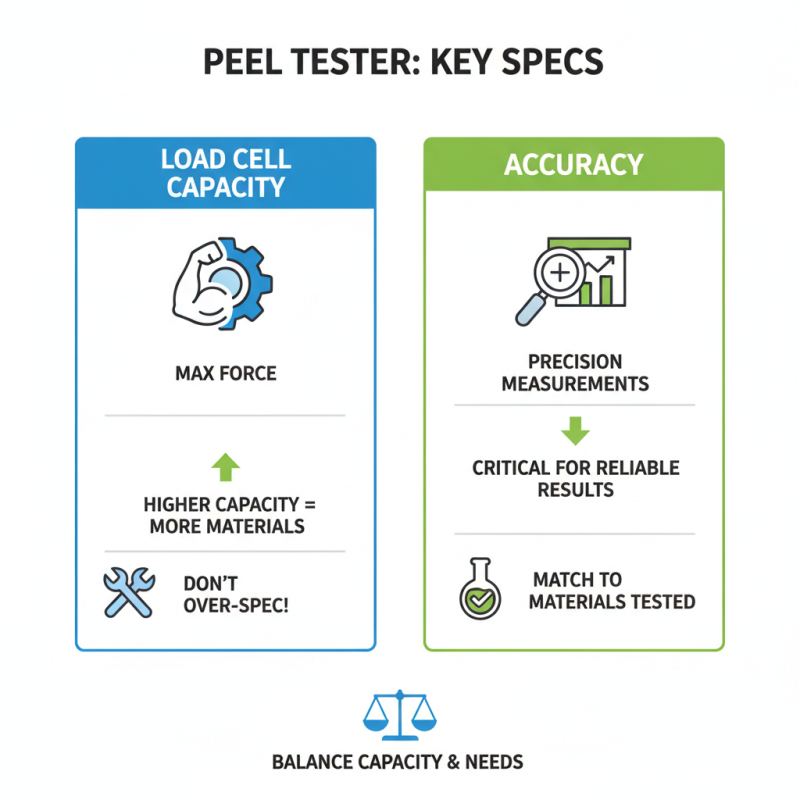
When choosing a peel tester machine, two key specifications stand out: load cell capacity and accuracy. The load cell capacity determines the maximum force the machine can apply. A higher capacity allows for testing of a broader range of materials and thicknesses. However, choosing a machine solely based on capacity might not be wise. It's essential to consider the most common materials you will test.
Accuracy is equally crucial. A machine with high accuracy provides reliable data, ensuring that the results reflect the actual performance of the materials. Look for machines that offer detailed specifications in this area. It’s often tempting to choose a lower-priced model, but inaccuracies can lead to costly errors in production.
Think about your specific testing needs. Consider both load cell capacity and accuracy carefully. Balancing these aspects can be challenging, especially if your requirements change over time. There’s often a trade-off between maximum capacity and precise measurements. Continuously reflect on your choices to ensure they align with your testing goals.
Maintenance and Calibration: Ensuring Longevity of Your Peel Tester Machine
Maintenance and calibration are vital for the longevity of a peel tester machine. Regular upkeep ensures consistent and accurate results, crucial in industries like packaging and adhesives. Neglecting these tasks can lead to unreliable readings, resulting in defective products. Research indicates that about 25% of machines experience performance issues due to inadequate maintenance.
Calibration should occur periodically and after significant use. A well-calibrated machine minimizes measurement errors, which can be substantial. An AAMA study found that incorrect measurements can lead to production waste of up to 15%. Simple maintenance tasks include cleaning sensors, checking for wear, and updating software if applicable.
Remember that manufacturers often recommend specific maintenance schedules. Ignoring these can risk operational efficiency. Many operators overlook minor issues that can snowball into major problems. Regularly reviewing the machine's performance can help identify patterns in failures, enhancing future operations.
Maintenance and Calibration Frequency of Peel Tester Machines