China Top 10 Remote IO Module Manufacturers?
Selecting a Remote Io Module manufacturer is about more than comparing prices or counting input and output channels. The right choice can affect how reliably sensors, valves, and controllers communicate across a production line. In this guide to China’s top 10 manufacturers, we compare practical factors: protocol support, channel density, electrical isolation, diagnostics, operating temperature, documentation, and after-sales service.
IoT pioneer Kevin Ashton wrote, “The Internet of Things has the potential to change the world, just as the Internet did. Maybe even more so.” His observation concerns connected systems broadly, not Remote I/O modules specifically. Still, it highlights why dependable data collection matters. A module in a dusty cabinet beside a conveyor must do more than exchange data on paper. It must also fit the control architecture and remain maintainable.
This list aims to help engineers and buyers build a useful shortlist, not declare one universal winner. Product ranges change, and a strong specification sheet does not guarantee responsive support. Details matter. Check the exact model, protocol version, environmental limits, and integration requirements before ordering. A ranking can miss local service differences or application-specific constraints; that is worth remembering. The manufacturers discussed here should therefore be evaluated against your own site conditions, project budget, and long-term maintenance plan.
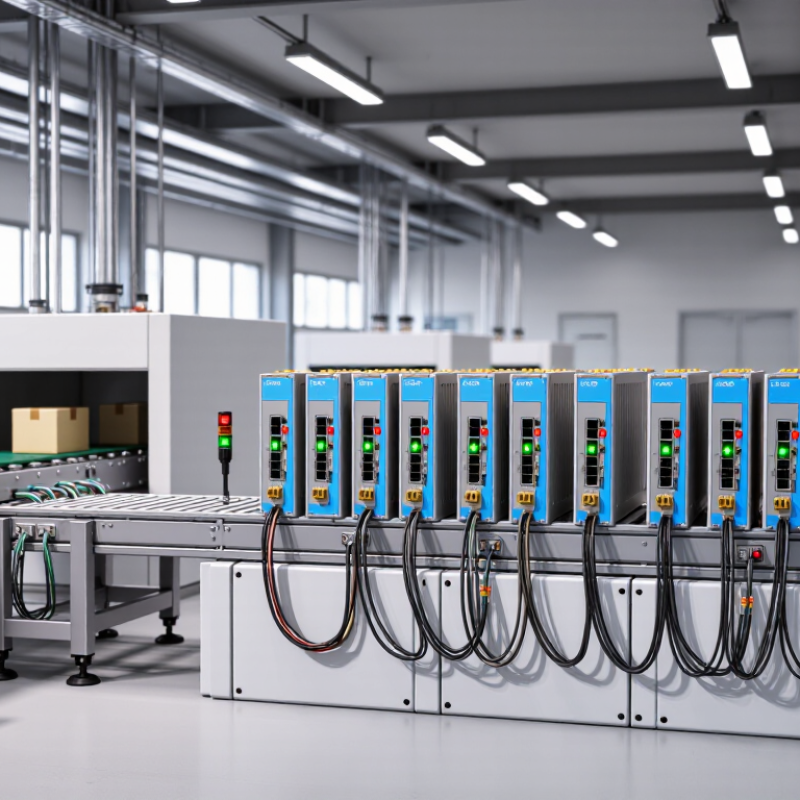
What Remote I/O Modules Are and How They Work
Remote I/O modules connect field devices to a controller over an industrial network. A digital input can report whether a limit switch is open; an analog channel can measure changing tank pressure. Output channels send commands to valves, relays, or motors. The module converts electrical signals into data the controller can read, then turns control instructions back into usable outputs. It sits near equipment, often inside a cabinet on a production floor. Less cable. A practical benefit is shorter field wiring, especially across large machines. It does not remove wiring entirely; power, grounding, and device connections still matter.
During operation, the module scans its channels and exchanges data with the controller using a communication protocol. If a sensor changes state, its input status is updated and transmitted; the controller’s logic then decides what should happen. Many modules also report faults, such as a broken wire or lost communication, though diagnostics vary. That neat sequence can be less neat in real plants. Electrical noise, slow network updates, incorrect configuration, or a poorly chosen module can delay or distort information. Engineers should check channel type, signal range, response time, isolation, and environmental rating against the actual devices. A module may look compatible on paper. Check the details. Test it under realistic operating conditions.
China’s Remote I/O Module Industry at a Glance
China’s remote I/O industry is tied to the scale and changing needs of its manufacturing base. The International Federation of Robotics’ World Robotics 2024 report recorded 276,288 industrial robot installations in China in 2023, about 51% of global installations. Each automated cell can require distributed connections for sensors, valves, drives, and safety signals. Remote I/O helps bring these signals back to controllers without running every cable to one cabinet.
Demand is not uniform. Electronics lines may need compact, high-density modules, while machinery and process sites often prioritize rugged housings, isolation, and stable fieldbus communication. China’s National Bureau of Statistics reported industrial robot output of about 430,000 units in 2023, down 2.2% year over year. That uneven movement is a reminder: automation growth does not rise smoothly.
Details matter. Buyers often compare channel count, response time, diagnostic visibility, temperature range, and support for common industrial networks. Yet public reports rarely isolate remote I/O module sales from the broader automation market, so precise market-size claims deserve caution. Installation conditions matter, too. A module that works well in a clean test cabinet may need better shielding or clearer diagnostics beside a noisy motor drive.
Criteria for Evaluating Remote I/O Module Manufacturers
When evaluating remote I/O module manufacturers, look beyond channel count and headline specifications. Check whether the modules support the protocols used by your controllers and supervisory systems. Confirm input types, output ratings, isolation, and response times against the actual equipment. A mismatch may only appear during commissioning. That’s costly.
Environmental ratings matter, too. A cabinet near a washdown area or a vibrating pump needs different protection from a clean control room. Review operating temperature, ingress protection, vibration limits, and power requirements. Ask for test reports and clear wiring diagrams, not just a polished product sheet. Small details matter. No scorecard is perfect.
Assess the manufacturer’s engineering support, documentation quality, firmware update process, and expected product life. Useful diagnostics can help technicians identify a broken sensor wire without opening every cabinet. Check how faults are indicated and whether configuration tools are practical for your maintenance team. A sample test with representative sensors often reveals more than a lengthy sales call. The test may still miss edge cases, so record what remains uncertain. Spare-part availability and change notifications also affect long-term reliability. Compare evidence, not promises.
China’s Top 10 Remote I/O Module Manufacturers
China Top 10 Remote IO Module Manufacturers?
China’s Top 10 Remote I/O Module Manufacturers
China’s remote I/O suppliers serve factories that need reliable connections between field devices and control systems. The market is broad, so a useful top-ten comparison should look beyond product catalogs. Check supported protocols, channel density, isolation, operating temperature, and published test records. Ask how modules behave after a network interruption. Small details matter: a loose terminal or unclear status light can slow a night-shift repair.
Demand is substantial. The International Federation of Robotics reported 276,288 industrial robot installations in China in 2023, representing 51% of global installations that year. This is not a remote I/O market-size figure, but it signals the scale of automated production environments where distributed I/O can be used. For a practical shortlist, compare response time, diagnostic features, wiring effort, documentation quality, and local technical support. Request a sample configuration and test it with the intended controller before purchase. A polished catalog is not proof. Field conditions can be messy, and supplier claims deserve verification.
How to Compare Manufacturers and Choose the Right Supplier
How to Compare Manufacturers and Choose the Right Supplier
Choosing a remote I/O supplier takes more than comparing channel counts and unit prices. Grand View Research valued the global industrial automation market at USD 205.86 billion in 2023 and projected USD 395.09 billion by 2030. This broad market forecast does not rank remote I/O makers, but it reflects the growing importance of dependable automation components. Treat market size as context, not proof of product quality.
Compare each module’s protocol support, channel isolation, resolution, update time, and operating temperature. Check whether the supplier publishes clear wiring diagrams, test records, and firmware revision histories. Ask for a sample and test it with your controller, sensors, and actual cable lengths. That matters. A module that works on a clean bench may behave differently beside a motor drive or in a hot cabinet.
Also review production consistency, technical support response times, spare-part availability, and stated product lifecycle. Request traceable test results for the exact model and configuration you plan to buy. Check certifications against your installation requirements rather than relying on a general claim. A low quote can hide configuration limits or long replacement lead times. I would not judge a supplier by one successful sample alone; that is an easy test to overvalue. Compare multiple units and clarify how defects are handled before approving a larger order.