


Material Testing Blog

HomeMaterial Testing Blog

What Is the Best SMC Slice Material Press in 2026?

Choosing the best Smc Slice Material Press in 2026 requires more than comparing prices or advertised pressure ratings. Manufacturers now face demanding production targets, tighter quality controls, and growing expectations for energy efficiency. A reliable press must deliver stable force, accurate temperature control, and clean, repeatable cuts across different SMC formulations.

Small details matter. A rigid frame reduces vibration during pressing. Even heating helps prevent uneven curing and surface defects. Responsive hydraulic control can protect molds while maintaining consistent pressure. Operators should also examine platen size, cycle time, maintenance access, emergency controls, and available technical support. These features influence daily productivity more than impressive brochure language.

This guide evaluates current press options through practical manufacturing criteria and recognized engineering principles. It considers performance, durability, operator safety, serviceability, and long-term operating value. Manufacturer specifications remain important, but real factory conditions can reveal different results. A machine that performs well in a clean test facility may struggle with dust, temperature changes, or frequent material variation.

There is no universal winner. The right choice depends on production volume, component size, material behavior, and available floor space. Our comparison is useful, but not flawless. Some performance claims require independent testing and extended factory use. Buyers should request application trials, inspect maintenance records, and confirm compliance with relevant workplace requirements. A careful decision can reduce rejected parts, unexpected downtime, and costly tooling damage. That is the practical standard for identifying the best Smc Slice Material Press in 2026.
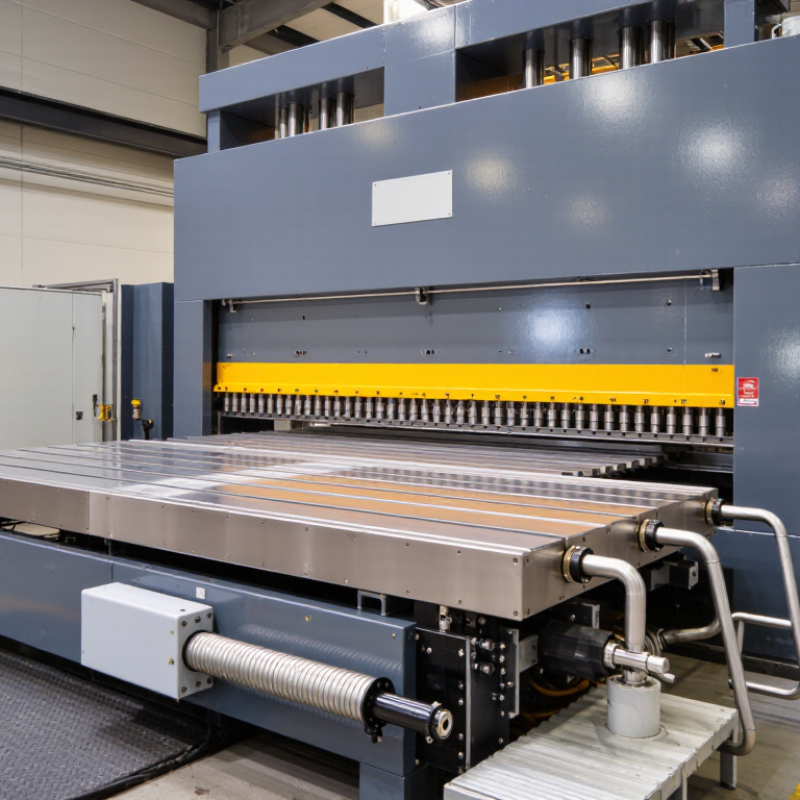
What Is the Best SMC Slice Material Press in 2026?

SMC Slice Material Press: Definition, Purpose, and Core Functions

An SMC slice material press is a forming machine for measured slices of Sheet Molding Compound. SMC combines resin, chopped glass fibers, fillers, and additives. The press places this prepared charge between heated platens, then applies controlled force. It is not simply a cutter.

Its purpose is to turn loose or pre-measured SMC slices into stable, shaped components. Heat softens the resin, while pressure helps the compound flow into the mold cavity. Core functions include charge positioning, platen heating, pressure control, dwell-time management, mold opening, and part release. Some systems also monitor thickness, temperature, and hydraulic performance during each cycle.

Experienced technicians check the slice weight before loading. A small variation can create thin corners, dry areas, or unwanted flash. Proper temperature control matters because overheated material may cure too early. Insufficient heat can leave weak consolidation. Clean mold surfaces are essential. Small errors matter.

In production trials, operators often adjust pressure and dwell time together. That approach is not always ideal. Changing one variable at a time gives clearer evidence, although it takes longer. A reliable press should provide repeatable force, even heating, guarded movement, and accessible maintenance points. Its control records can also help trace defects to a specific cycle. The best choice depends on part size, fiber content, required output, and the manufacturer’s validated process window.

What Is the Best SMC Slice Material Press in 2026?

The best SMC slice material press should provide enough closing force for the projected molding area while maintaining stable pressure, temperature, and platen parallelism. The chart below estimates the required press force at common SMC molding-pressure levels.

How to read the chart: Estimated force is calculated from projected part area and molding pressure. Actual press selection should also include a safety margin, mold weight, friction, flash control, and the required platen size.

How SMC Slice Material Presses Work Step by Step

What Is the Best SMC Slice Material Press in 2026?

An SMC slice material press converts thick sheet molding compound into controlled pieces for later forming. The best machine depends on sheet thickness, cutting accuracy, production volume, and operator access. A reliable press should provide stable pressure, adjustable stroke length, guarded cutting areas, and clear control settings. Small differences matter.

The process begins with a clean material inspection. Operators check the sheet for wrinkles, contamination, and uneven thickness. The sheet then moves onto the feed table, where guides keep its edges aligned. A measured feed system advances the material to the selected cutting position. The press head lowers with controlled force. Its cutting tool separates one slice without crushing nearby layers. The cut piece then moves to a tray or transfer area.

After each cut, sensors confirm the press position and material movement. Operators inspect the slice length, edge quality, and surface condition. If the edge looks torn, the blade may need adjustment or replacement. Pressure settings also require attention. Excessive force can deform the compound, while insufficient force leaves incomplete cuts. In practice, the first setting is rarely perfect. Experienced teams record results and refine the setup gradually. That habit improves repeatability, although even a well-maintained press can show variation when material temperature changes. A practical 2026 choice should make these adjustments visible, measurable, and safe for daily production.

What Is the Best SMC Slice Material Press in 2026? - How SMC Slice Material Presses Work Step by Step
Step Process Stage What the Press Does Typical Engineering Data Main Control Point Expected Result
1 Material Preparation Receives pre-cut SMC slices or charge packages and positions them on the lower mold surface. Typical SMC density: 1.7–2.0 g/cm³; common glass-fiber content: 20–30% by weight. Keep the material clean, correctly weighed, and within the supplier’s recommended storage life. A consistent charge that matches the required part mass and fiber layout.
2 Charge Layout Places the SMC slices in a pattern that supports flow into ribs, corners, bosses, and other detailed areas. Charge coverage is commonly designed at approximately 50–75% of the projected cavity area, depending on geometry. Use balanced placement rather than relying only on a central charge. More uniform filling, lower weld-line risk, and reduced fiber distortion.
3 Mold Closing Closes the heated mold at a controlled speed until the cavity reaches the programmed compression position. Typical mold temperature: 140–170°C; closing speed is adjusted to part geometry and air-release requirements. Prevent premature locking, trapped air, and uncontrolled material displacement. The SMC charge begins to soften and spread without excessive flash or air entrapment.
4 Heating and Flow Transfers heat through the mold and compresses the softened SMC so it flows through the cavity. Typical compression pressure: 5–15 MPa; actual force depends on projected area and cavity pressure. Maintain even temperature across the mold and stable hydraulic pressure. Complete filling of the cavity, including thin walls and reinforcing features.
5 Press Force Selection Generates enough force to hold the mold closed against cavity pressure and prevent excessive flash. Required force = projected area × design pressure. Example: 0.20 m² × 10 MPa = approximately 2,000 kN. Select a press with reserve capacity; a practical design margin is commonly added above the calculated force. Stable molding without mold opening, excessive flash, or hydraulic overload.
6 Curing Maintains mold temperature and compression while the thermoset resin cross-links and hardens. Typical cure time: approximately 30–120 seconds, depending on part thickness, resin system, and mold temperature. Use cavity temperature and cure-time validation rather than time alone. A rigid, dimensionally stable composite part with the required mechanical properties.
7 Pressure Release Reduces pressure in a controlled manner after the cure cycle to minimize distortion and sticking. Decompression speed should be adjustable; abrupt release can increase spring-back and dimensional variation. Coordinate pressure release with mold-opening and ejection settings. Lower risk of warpage, surface damage, and ejection defects.
8 Mold Opening Separates the mold halves while maintaining a controlled opening profile. Opening stroke and daylight must accommodate the part, mold height, inserts, and handling system. Use synchronized motion and sufficient daylight for safe part removal. Clean separation without tearing, deformation, or damage to molded details.
9 Part Ejection Activates ejector pins, stripping plates, or an automated handling system to remove the cured part. Ejection force depends on part geometry, draft angle, surface finish, and mold release behavior. Apply balanced ejection force and avoid concentrated loading on thin sections. Repeatable part removal with minimal marks and low breakage risk.
10 Inspection and Trimming Supports removal of flash and inspection of dimensions, surface quality, fiber distribution, and defects. Common checks include mass, thickness, dimensional tolerance, voids, short shots, and flash height. Link inspection results to charge weight, mold temperature, pressure, and cure time. A stable process window and consistent finished-part quality.
11 Best Press Configuration for 2026 Uses a programmable hydraulic compression press designed for repeatable SMC charge placement and molding. Recommended capabilities: closed-loop force control, heated platens, multi-zone temperature control, adjustable speed, recipe storage, and automatic data logging. Prioritize controllability, platen parallelism, repeatability, safety interlocks, and serviceability over maximum tonnage alone. A press that delivers consistent filling, curing, dimensions, cycle time, and energy use across production runs.
Typical values are engineering reference ranges for conventional thermoset SMC compression molding. Final settings must be validated with the specific SMC formulation, part geometry, mold design, and material supplier recommendations.

Key Materials, Components, and Performance Specifications

What Is the Best SMC Slice Material Press in 2026?

For SMC slice production, the best press balances force, heat control, and repeatability. Grand View Research estimates the global SMC market could reach about USD 5.8 billion by 2030, with strong demand from transportation and electrical applications. This growth makes process stability more important than maximum tonnage.

A practical press should provide 5–15 MPa molding pressure and heated platens with ±2°C temperature uniformity. Typical SMC uses 25–40% glass fiber, unsaturated polyester resin, mineral filler, and additives. The press needs rigid platens, a responsive hydraulic circuit, automatic pressure holding, and sufficient daylight for the mold package. A programmable controller should record pressure, temperature, closing speed, and curing time. These records support traceability and testing under ASTM D638, ASTM D790, or ISO 178. MarketsandMarkets identifies compression molding automation as a key efficiency driver, but automation cannot correct poor charge placement.

Tips: Check platen parallelism with a calibrated feeler gauge. Inspect oil temperature during continuous cycles. Leave room for ejectors and mold maintenance. A 2,000-ton press may look impressive, yet it can waste energy on smaller parts. I have seen specifications that ignored cooling time, which later caused warpage and uneven gloss. That mistake is easy to repeat. Also, verify the actual pressing area, not only the nominal force. A smaller, accurately controlled press may produce better slices than a larger machine with unstable heat.

How to Compare SMC Slice Material Presses in 2026

When comparing SMC slice material presses in 2026, begin with repeatability, not headline tonnage.

A press should maintain stable pressure across the platen, even when the charge is placed slightly off-center. Check platen parallelism, closing speed, daylight, and mold temperature uniformity. These details affect fiber flow, surface finish, and rejected panels.

Energy use deserves careful attention. The U.S. Department of Energy reports that industrial motor systems can represent a major share of manufacturing electricity demand. Therefore, compare installed power, idle consumption, hydraulic efficiency, and cycle time. A faster press is not automatically better. Measure complete cycles, including loading, curing, opening, and unloading. MarketsandMarkets projects continued growth in the global compression molding market through 2029, increasing pressure to produce consistently at higher volumes.

Look closely at controls and maintenance access.
A useful system records pressure curves, temperature zones, alarms, and recipe changes. Ask for actual test data using your SMC formulation. Laboratory figures can mislead. The JEC Composites Observatory continues to identify automotive and industrial applications as important composite demand areas, where traceability matters. Also inspect guarding, two-hand controls, emergency stops, and operator visibility against applicable machinery standards.

I would not ignore training time. A technically impressive press can still underperform when adjustments are difficult. That is an uncomfortable, but common, purchasing mistake.

Safety, Maintenance, and Selection Guidelines for Buyers

What Is the Best SMC Slice Material Press in 2026?

Safety, Maintenance, and Selection Guidelines for Buyers

The best SMC slice material press is not always the largest or fastest model. It should match your material, tooling, production volume, and operator skill. In practical use, stable pressure and even platen temperature matter more than impressive specifications. Look for guarded closing areas, reliable emergency stops, door interlocks, and clear control displays. A press should also provide repeatable force, accurate temperature control, and enough daylight for safe loading. Hydraulic systems need smooth movement without sudden pressure changes. Electrical panels should remain protected from heat, dust, and resin residue.

Maintenance affects safety as much as design. Inspect hoses, seals, heaters, sensors, and platen surfaces on a fixed schedule. Record pressure and temperature readings, even when production appears normal. Small oil leaks can become serious faults. Calibration should follow the manufacturer’s technical guidance and your internal quality procedures. Keep tools clean and remove cured SMC material carefully. Never reach into a closing area during adjustment. Proper isolation and lockout procedures are essential. Training still gets underestimated.

Tips: Compare real production samples, not only brochures. Ask for service intervals, spare-part availability, safety documentation, and operator training. Check whether the control system stores useful process data. Confirm the press fits your floor space, power supply, ventilation, and tooling. A perfect choice rarely exists. I would rather select a slower press with dependable support than a powerful machine that is difficult to maintain. เครดิตฟรี

Go to Top