Top 5 Best Small Tensile Testing Machines for Accurate Material Testing?
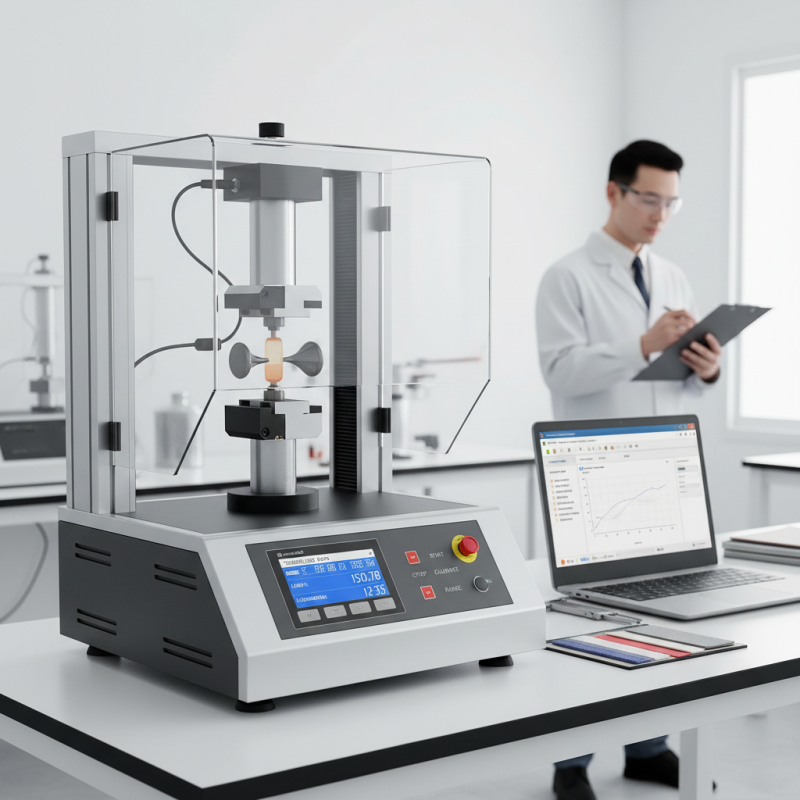
In the realm of material testing, precision is crucial. A small tensile testing machine is designed for this purpose. These machines enable accurate measurement of tensile strength, elongation, and other critical properties. They play a vital role in industries like manufacturing and construction.
However, not all small tensile testing machines are created equal. Their performance can vary significantly based on design and features. Choosing the right one can be challenging. Users must consider factors like load capacity and ease of use. A poorly chosen machine can lead to misleading results. Thus, it is essential to reflect on the specific needs before making a decision.
This article will explore the top five small tensile testing machines. These selections balance functionality and affordability. The focus will be on their unique features, user experiences, and overall reliability. With this information, you can make a more informed choice.
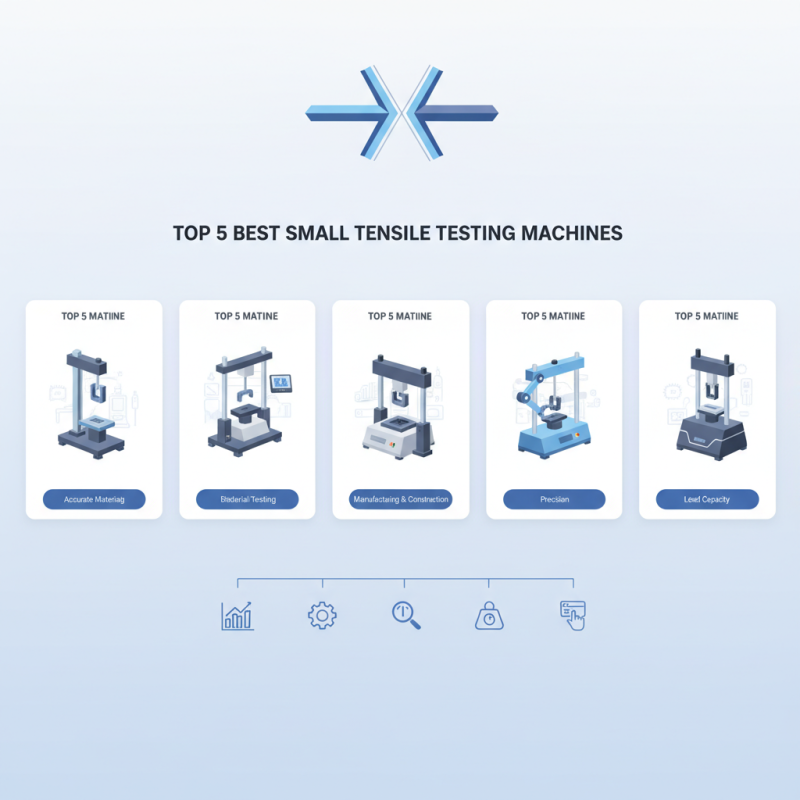
Top 5 Small Tensile Testing Machines: An Overview of Key Features
When it comes to tensile testing, selecting the right equipment is crucial. Smaller tensile testing machines offer unique advantages for labs with limited space. These machines often blend portability with precision, making them an appealing choice. Key features typically include digital displays, user-friendly interfaces, and automatic data collection. This ensures that results are accurate and easy to interpret.
One must also consider the materials being tested. Some machines excel with polymers, while others are better suited for metals. Calibration is vital for reliable outcomes, yet it can be overlooked at times. Many users find themselves faced with challenges in achieving consistent results. This often leads to frustration. Another aspect to note is the software compatibility some machines offer. It can enhance data analysis but may complicate the process for new users. Balancing features and ease of use is essential when choosing a small tensile testing machine.
Importance of Accurate Material Testing in Engineering and Manufacturing
Accurate material testing is critical in engineering and manufacturing. It ensures materials meet safety and quality standards. A recent report found that improper testing leads to approximately 10% of product failures. Such failures can cost companies millions in recalls and lost reputation. Investing in reliable tensile testing machines can mitigate these risks.
Material properties directly influence product performance. For example, tensile strength is vital for structures bearing heavy loads. Engineers must know a material’s limits. Testing machines help define these limits by measuring how much force a material can withstand before failure. A consistent testing process enhances design accuracy and safety.
**Tip:** Always calibrate your testing equipment regularly. Calibration ensures accurate results. Small errors in measurement can lead to significant defects.
**Tip:** Keep records of all tests conducted. Documentation helps trace back issues in manufacturing. It also supports compliance with industry standards.
Relying on precise data from material testing remains important. Companies looking to innovate should continually assess their testing equipment. Constant reflection on procedures ensures ongoing improvement.
Top 5 Best Small Tensile Testing Machines for Accurate Material Testing
The following chart illustrates the maximum tensile strength (in MPa) and precision rating (%) of five popular small tensile testing machines, demonstrating the importance of accurate material testing in engineering and manufacturing.
Criteria for Selecting the Best Small Tensile Testing Machines
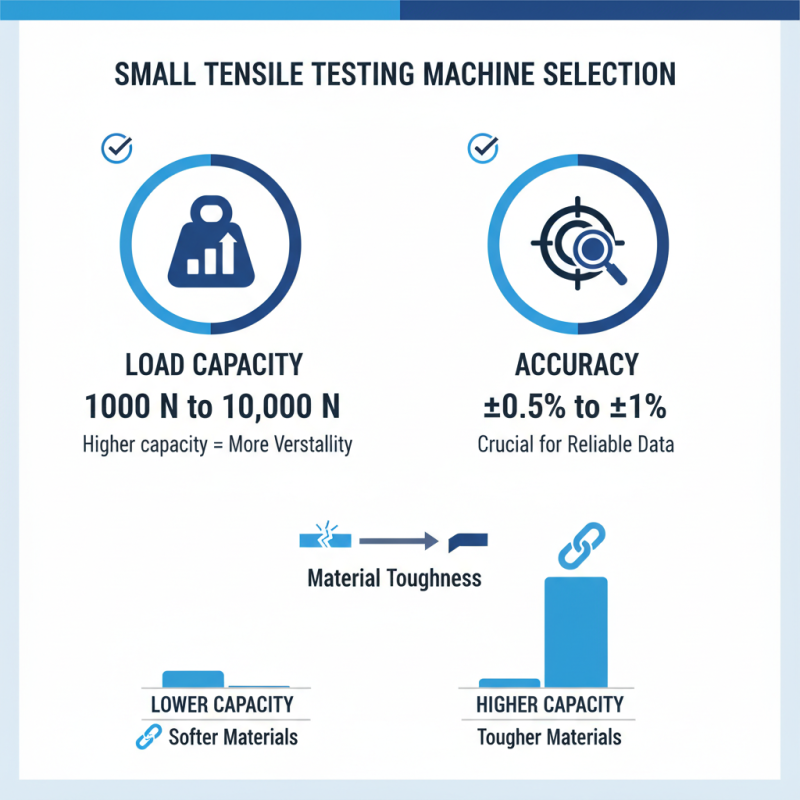
When choosing the best small tensile testing machines, several key criteria come into play. Accuracy is crucial. A machine needs to provide precise readings for tensile strength and elongation. Operators should check calibration and ensure the device can handle the materials being tested. Consider the testing range, as a wider range accommodates various sample sizes. This versatility is essential for diverse industries.
Portability matters, particularly for labs with limited space. A compact design allows for easy storage and maneuvering. However, it's essential to assess whether this portability compromises stability or functionality. Another factor is user-friendliness. An intuitive interface simplifies operation, especially for less experienced personnel. Training can take time and resources, which might not always be available.
Lastly, budget constraints often impact decisions. Balancing cost and quality can be challenging. Cheaper machines may offer fewer features, leading to potential inaccuracies. On the other hand, high-end devices may exceed what is necessary for basic material testing. Regular maintenance and support options should also be considered, as these factors affect long-term usability. Finding a machine that consistently meets operational needs involves weighing these aspects carefully.
Industry Standards and Calibration Requirements for Tensile Testing Machines
When considering tensile testing machines, industry standards play a crucial role in ensuring accurate results. These machines must meet specific calibration requirements. Calibration helps identify potential inaccuracies and guarantees that the readings are reliable. Different industries, like construction and manufacturing, have unique standards. Familiarizing yourself with these can prevent costly mistakes.
Calibration should be performed regularly. An uncalibrated machine can deliver skewed data, leading to flawed conclusions. Verify if the machine meets ASTM or ISO standards relevant to your field. This way, you build trust in your testing results.
**Tip:** Always keep a record of calibration dates and results.
Moreover, ensure that your team is well-trained. An operator unfamiliar with the machine's functions may overlook important details. This can affect the outcome of a test. Encourage continual learning to enhance skills.
**Tip:** Regular training sessions can be beneficial.
Maintaining proper documentation for every test is vital. It adds an extra layer of credibility to your results. Consider developing a streamlined process for recordings. This way, if challenges arise, you can trace back the steps easily.
Top 5 Best Small Tensile Testing Machines for Accurate Material Testing
| Model |
Max Capacity (kN) |
Accuracy (%) |
Testing Speed (mm/min) |
Dimensions (mm) |
| Tensile Test A |
10 |
±1.0 |
50-500 |
800 x 400 x 300 |
| Tensile Test B |
20 |
±0.5 |
30-300 |
900 x 450 x 350 |
| Tensile Test C |
5 |
±1.5 |
10-200 |
600 x 350 x 250 |
| Tensile Test D |
15 |
±0.7 |
20-400 |
700 x 420 x 300 |
| Tensile Test E |
25 |
±0.2 |
25-250 |
850 x 480 x 320 |