Best Roll to Roll UV Printer for Global Buyers in 2026?
As the printing industry evolves, the demand for high-quality printing solutions is increasing. Among these, the Roll to Roll UV Printer stands out. This technology offers versatility and efficiency for both small and large-scale projects. In 2026, choosing the best Roll to Roll UV Printer will be crucial for global buyers. It will play a significant role in meeting diverse printing needs.
Today, various manufacturers are competing in this space. Each offers unique features, but not all printers deliver the same quality. Buyers should prioritize reliability and performance. Consider the materials and applications each printer can handle. This is where expertise becomes essential. Understanding specifications helps buyers make informed decisions.
However, selecting the right Roll to Roll UV Printer is not without challenges. Buyers might overlook important factors, such as maintenance and support. It's vital to evaluate the long-term costs, not just the initial price. Reflecting on these considerations can lead to better choices in the future.
Overview of Roll to Roll UV Printing Technology
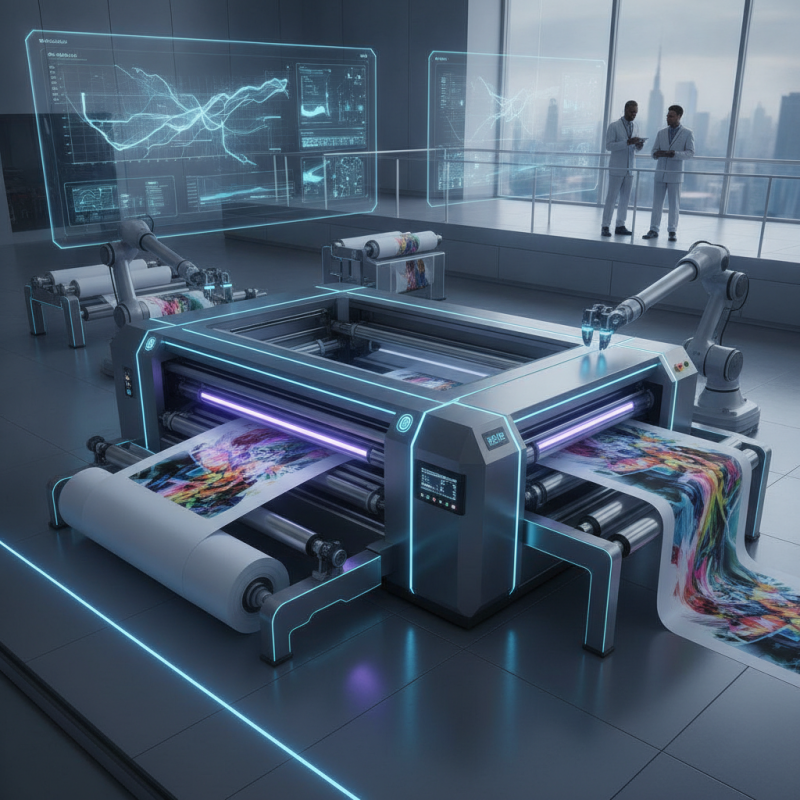
Roll to roll UV printing technology is gaining momentum in various industries. This method utilizes UV light to cure inks on flexible materials. According to a report by Smithers Pira, the market for roll to roll printing is projected to grow at a CAGR of approximately 10% through 2026. Such growth highlights the increasing demand for high-quality prints across packaging, textiles, and signage.
One of the standout features of this technology is its efficiency. It allows for continuous printing, minimizing downtime and maximizing productivity. Reports indicate that companies adopting this technology improve speed by up to 30% compared to traditional printing methods. However, challenges remain. The initial investment costs can be substantial, and skilled operators are essential to maximize output quality.
Furthermore, the environmental impact cannot be ignored. While UV printing reduces waste, the inks often contain chemicals that require careful handling. There is a growing call for more sustainable options. Buyers need to consider not just the cost, but also the longevity and environmental footprint of their printing solutions. This reflection is key in a rapidly evolving market.
Key Features to Consider in 2026 Roll to Roll UV Printers
When choosing a roll to roll UV printer in 2026, buyers should focus on a few key features. Print quality is crucial; high resolution can impact the final product substantially. Reports suggest that printers offering at least 1200 DPI resolution will be essential for professional applications. This level of detail ensures vibrant colors and crisp images.
Another important factor is speed. In a competitive market, efficiency matters. Many modern roll to roll UV printers are capable of speeds exceeding 100 square meters per hour. However, the trade-off between speed and quality can present challenges. Buyers should consider their specific needs and production capacity before making a decision. Also, energy consumption is increasingly relevant. Low-power units not only reduce overheads but also align with global sustainability goals.
Lastly, software compatibility is often overlooked. The printing workflow should integrate seamlessly with existing designs and file formats. Disruptions can lead to wasted time and resources, impacting overall productivity. Many users report frustrations with proprietary systems that lack flexibility. A printer with open format capabilities can enhance user experience, but this aspect needs thorough investigation. Balancing these key features will ultimately inform the best choice for a roll to roll UV printer in the coming year.
Top Manufacturers and Their Innovations in Roll to Roll UV Printing
The roll-to-roll UV printing market is evolving rapidly. In 2026, manufacturers will introduce innovative technologies that streamline production. Many advancements focus on improving print quality and efficiency. A recent report indicated that the global roll-to-roll UV printer market is projected to reach $1.3 billion by 2025, reflecting a compound annual growth rate (CAGR) of 8.4%. This growth drives competition and innovation among industry leaders.
Key players are investing in new materials and software solutions. These technologies aim to enhance color accuracy and reduce waste. Innovations in curing systems, for example, enable faster drying times and higher output. Data shows that printers with advanced LED technology consume 30% less energy, presenting a more sustainable printing option. However, challenges remain in meeting the diverse needs of customers.
Balancing efficiency with quality is crucial yet difficult. As manufacturers roll out new products, they must heed market demands for customization. Customer feedback often highlights the need for versatility at a lower cost. In an evolving landscape, constant adaptation is essential. The future of roll-to-roll UV printing hinges on meeting these challenges head-on.
Market Trends and Consumer Preferences for UV Printers in 2026
As we move into 2026, the landscape of UV printing is evolving rapidly. Market trends indicate a growing preference for roll-to-roll UV printers among global buyers. This shift is driven by the need for versatility and efficiency in production. Brands are realizing that customization is key. Consumers desire solutions that offer high-quality prints on various substrates, from vinyl to textiles. Ease of use is also crucial. Users are looking for machines that integrate smoothly with existing workflows.
The demand for eco-friendly solutions is another prominent trend. Buyers are becoming increasingly aware of sustainability. They prefer printers that utilize water-based inks and minimize waste. However, the challenge remains in balancing quality and eco-friendliness. Many machines struggle to achieve both while maintaining speed. Furthermore, the support and maintenance of these printers are vital concerns. Knowledgeable customer service can make a significant difference in operational success.
Additionally, consumer preferences are shifting towards smart technology integration. Features like automated color management and real-time monitoring are becoming important. Many users expect these innovations to streamline processes and reduce errors. However, not all users are tech-savvy. This gap in familiarity can hinder adoption rates. Industry players need to consider user training as a critical factor in their offerings. A printer's effectiveness relies not just on its specs, but on how well users can harness its capabilities.
Comparative Analysis of Leading Roll to Roll UV Printers Available Globally
The market for roll to roll UV printers is rapidly evolving. According to a recent industry report, the global market for UV printers is projected to reach $6.3 billion by 2026. This growth reflects increasing demand across various sectors, including signage, packaging, and textiles. Advanced technologies are now being integrated into machinery, enhancing print quality and efficiency.
Key features of leading printers include high-speed printing capabilities and superior ink adhesion. Many devices now offer resolutions up to 1200 dpi, ensuring that even the most intricate designs are rendered with utmost clarity. However, some users have reported challenges related to maintenance and operational costs. These issues can affect profitability and overall user satisfaction.
Environmental considerations are also important. Many manufacturers are shifting towards eco-friendly inks and processes, but questions remain about their long-term sustainability. Buyers must evaluate the balance between performance and ecological impact. Despite the progress, the industry still faces hurdles. Understanding these factors is crucial when choosing the right printer for specific needs.
Best Roll to Roll UV Printer for Global Buyers in 2026
| Model | Print Width (inches) | Max Speed (sqm/hr) | Resolution (dpi) | Ink Type | Price Range (USD) |
| Model A | 54 | 50 | 1200 | UV Curable | $30,000 - $40,000 |
| Model B | 63 | 60 | 1440 | LED UV | $50,000 - $70,000 |
| Model C | 50 | 45 | 600 | Solvent-based | $15,000 - $25,000 |
| Model D | 76 | 70 | 720 | Dye-based | $20,000 - $30,000 |