


Material Testing Blog

HomeMaterial Testing Blog

Why Choose a High Torque Brushless DC Motor?

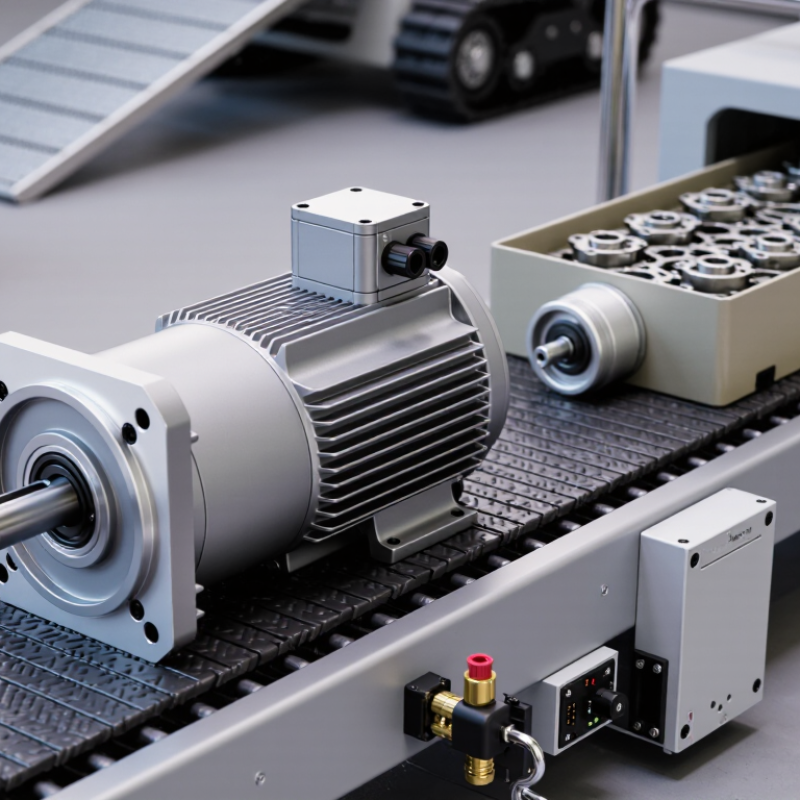
A High Torque Brushless Dc Motor can move a demanding load without relying on brushes that wear through contact. That matters in compact machines, where space is tight and every warm degree counts. Picture a conveyor starting with a full tray, or a mobile robot climbing a ramp. The motor must deliver starting torque, then keep running without overheating. High torque alone does not guarantee a good fit.

Motor-design author Duane Hanselman’s published work offers useful context for evaluating brushless permanent-magnet motors. A concise paraphrase of that design principle is: “Choose the motor for the load and operating point, not the torque claim alone.” This is a paraphrase, not a verbatim quotation. Look beyond headline specifications. Compare continuous and peak torque, speed range, drive compatibility, cooling, and the load’s actual duty cycle. Check the mounting dimensions, too. A powerful motor that cannot shed heat in a sealed housing may disappoint.

There is a trade-off. Higher torque can mean greater current, more heat, or a larger motor. Actual results depend on the controller, supply voltage, and cooling conditions. Ask for test data at the intended speed and load, not just a best-case figure. Small details matter. This guide explains where a High Torque Brushless Dc Motor can help, what specifications deserve scrutiny, and where a conventional motor may still be the more sensible choice. One caveat remains: published ratings do not replace testing in the real machine.
Why Choose a High Torque Brushless DC Motor?

What Defines a High-Torque Brushless DC Motor?

A high-torque brushless DC motor is defined by the turning force it can deliver at its output shaft, not by its size or label. Electronic commutation energizes the stator windings, moving the permanent-magnet rotor. The motor’s torque constant and current shape its output. More current can produce more torque, but only within electrical and thermal limits. There is no universal threshold for “high torque,” so the label is imperfect on its own.

A useful specification separates continuous torque from peak torque. Continuous torque can be sustained without overheating under stated conditions; peak torque is usually available for a limited time. Check the torque-speed curve, supply voltage, cooling method, and duty cycle. A motor may produce strong force at low speed yet lose torque as speed rises. A gearbox can increase output torque, but it does not change the motor’s own torque rating. Two motors with the same peak figure may perform quite differently in real equipment.

Tips: Compare continuous torque at your actual operating speed. Check current draw and temperature limits, too. Leave room for load spikes; a rating that barely meets the calculation may not be enough.

How Its Design Produces High Torque

Why Choose a High Torque Brushless DC Motor?

How Its Design Produces High Torque

A high-torque brushless DC motor is designed to create more turning force from its electromagnetic structure. Inside, permanent magnets on the rotor interact with current flowing through the stator windings. The motor’s controller switches that current in sequence, keeping the magnetic pull aligned with rotation. More useful magnetic force at the rotor means more torque at the shaft.

Geometry matters. A larger rotor diameter gives magnetic forces more leverage, while a longer active core provides more area for those forces to act. Carefully shaped magnets and stator teeth can also guide magnetic flux through the air gap. Windings with suitable wire size and coil turns help deliver the required current. Small details count.

A conveyor starting with a heavy load illustrates the benefit: the motor needs strong torque before it reaches normal speed. Yet high torque is not free. More current creates heat in the windings, and compact motors may have limited ways to shed it. I would not judge a motor by its peak-torque figure alone; that rating may apply only briefly. Continuous torque, cooling, controller limits, and the actual load deserve equal attention. There is a trade-off.

Where High-Torque BLDC Motors Are Used

High-torque brushless DC motors are used where equipment must move heavy loads from a standstill or hold position steadily. In robotic arms, they drive joints that lift tools, turn components, or maintain a fixed angle. A compact motor can fit inside a joint, while an encoder helps the controller track movement accurately. That matters.

Automated carts and warehouse vehicles use these motors to start, stop, and turn while carrying boxes across smooth floors. On production lines, they can power conveyors handling dense packages or parts. Their strong low-speed output can reduce reliance on bulky gearboxes, though the final design still depends on the load, speed, and duty cycle. A motor that works well in short bursts may overheat during continuous operation.

High-torque BLDC motors also appear in powered lifting equipment, adjustable workstations, and some mobility devices. Designers consider them when space is limited but controlled movement is essential. Heat, vibration, and uneven loads need careful testing. Torque alone is not enough; motor control, cooling, and mounting all affect real performance. I have seen specifications look convincing on paper, then fall short under repeated starts. Testing with the actual load is less glamorous, but more dependable.

Why Choose a High Torque Brushless DC Motor? — Where High-Torque BLDC Motors Are Used
Application Why High Torque Matters Common Motor Arrangement Key Selection Considerations
Mobile robots and automated guided vehicles High starting torque helps move a loaded vehicle from rest and maintain motion on ramps or uneven floors. BLDC motor paired with a gearbox, or an integrated wheel-drive unit. Payload, wheel diameter, required speed, incline, duty cycle, braking, and available battery power.
Electric bicycles and light electric vehicles Low-speed torque supports acceleration and climbing, especially when the vehicle is carrying a rider or cargo. Hub motor in a wheel or a centrally mounted motor driving the wheel through a transmission. Vehicle regulations, wheel size, terrain, cooling, battery voltage, and the balance between range and performance.
Industrial automation and conveyors Torque is needed to start moving belts, rollers, and other loads, and to maintain motion as the load changes. BLDC motor with a gearbox or an integrated drive and controller. Load inertia, starting frequency, continuous duty, speed control, ambient conditions, and required positioning accuracy.
Collaborative and service robots Joint motors need sufficient torque to move robot links and handle changing loads without relying on excessive motor speed. Compact BLDC servo motor, often combined with a reduction gearbox and position feedback. Torque across the operating range, joint speed, backlash, thermal limits, feedback type, and safe motion requirements.
Electric power tools High torque helps drive fasteners, turn cutting or grinding attachments, and cope with changing material resistance. Compact BLDC motor connected to the tool output through gearing or a direct drive. Peak and continuous load, tool speed, cooling, battery capacity, control response, and expected operating time.
Direct-drive rotary equipment A high-torque motor can drive a load at low speed, potentially reducing or eliminating a gearbox. Large-diameter, low-speed BLDC motor coupled directly to the load. Required output torque and speed, rotor size, heat dissipation, bearing loads, and installation space.
Pumps, fans, and compressors Torque supports startup and stable operation as the driven equipment encounters changing fluid or air loads. BLDC motor directly coupled to the impeller or connected through a suitable drive arrangement. Load profile, operating speed, fluid conditions, efficiency, enclosure protection, and control method.
Automotive auxiliary systems Electric actuators and pumps may need substantial torque from a compact motor, sometimes under variable loads. BLDC motor with an integrated controller, gearbox, or actuator mechanism. Supply voltage, temperature range, vibration, environmental protection, duty cycle, and system-level safety requirements.

Benefits and Limitations of High-Torque BLDC Motors

Why Choose a High Torque Brushless DC Motor?

A high-torque BLDC motor can move a heavy load without a bulky gearbox. Its electronic commutation also avoids brush wear and the dust that brushed motors can produce. For a compact conveyor, that can mean fewer mechanical parts and steadier operation.

Less routine maintenance. The U.S. Department of Energy’s 2014 Improving Motor and Drive System Performance: A Sourcebook for Industry reports that motor-driven systems use about 68% of electricity consumed by U.S. manufacturing. That figure covers many motor types, not BLDC motors alone, but it shows why drive efficiency matters.

The trade-offs are real. A BLDC motor needs an electronic controller, and setup must match the load, speed range, and power supply. High torque at low speed can demand substantial current, creating heat in the windings and controller. A tight enclosure can make cooling harder. Magnets and control electronics may also raise initial cost compared with a simpler motor. A torque rating is not the whole story.

In practice, check the motor’s continuous torque rating, not only its brief peak figure. Then test it under the actual load. A motor that handles a short lift may overheat during repeated cycles. This detail is easy to miss. And the controller may need tuning before motion feels smooth.

How to Choose the Right High-Torque BLDC Motor

Choosing a high-torque BLDC motor starts with the load, not the catalog’s peak-torque figure. Record continuous torque, startup torque, speed range, duty cycle, and available voltage. A conveyor lifting a heavy tote needs sustained torque; a valve actuator may need brief breakaway torque. Those are different jobs. The U.S. Department of Energy’s 2014 United States Industrial and Commercial Motor System Market Assessment Report estimated that motor-driven systems account for about 68% of U.S. manufacturing electricity use. Efficient sizing matters at that scale.

Compare the motor’s continuous-torque rating at your actual operating speed. Check how long peak torque is allowed, and under what cooling conditions. Also assess rotor inertia, gearbox needs, encoder feedback, and the controller’s current limit. Leave thermal margin. A motor that passes a brief bench test may still overheat during repeated starts. I would treat calculations as a first pass: friction, airflow, and mounting can differ from assumptions. Test the assembled system under a representative load, then measure current and motor temperature. That matters.

Why Choose a High-Torque Brushless DC Motor?

How to Choose the Right High-Torque BLDC Motor

How to read this chart: The curve is an idealized example using a linear torque–speed approximation, with 2.4 N·m stall torque and 3,000 rpm no-load speed; it is not measured data for a specific motor. When choosing a motor, check that its continuous torque meets the application’s load at the required speed, and confirm thermal limits, peak torque, drive compatibility, and operating conditions in the manufacturer’s datasheet.

Go to Top