


Material Testing Blog

HomeMaterial Testing Blog

7 Tips to Choose a Micron Pleated Filter Cartridge

Choosing the right Micron Pleated Filter Cartridge affects product quality, equipment protection, and operating costs. In many facilities, the cartridge looks like a simple white cylinder. Its performance depends on pore size, media material, flow rate, pressure, and contamination load. A 5-micron cartridge may protect a beverage line effectively, yet perform poorly in a high-viscosity process.

Industry demand continues to grow as manufacturers improve water reuse and process control. MarketsandMarkets’ recent filtration industry analysis identifies water treatment, pharmaceuticals, food processing, and industrial manufacturing as major filtration application areas. Grand View Research also reports continued expansion in the global water filtration market, driven by stricter quality expectations and aging infrastructure. These trends make cartridge selection more important, not less. Small specification errors can increase replacement frequency and downtime.

This guide presents seven practical tips for selecting a Micron Pleated Filter Cartridge. It considers nominal and absolute ratings, filter media, housing compatibility, flow requirements, pressure drop, chemical resistance, and certification needs. These details matter. A polypropylene cartridge may suit general water filtration, while PES or PTFE may better support demanding pharmaceutical applications. The label alone is not enough. Review test methods, operating temperature, and manufacturer data before purchase. NSF standards, FDA-related material requirements, and site-specific procedures should also be checked where applicable. A low-cost cartridge can appear efficient. It may not be. Pilot testing remains valuable, especially when feedwater quality changes seasonally. Even experienced engineers can overlook that variable.
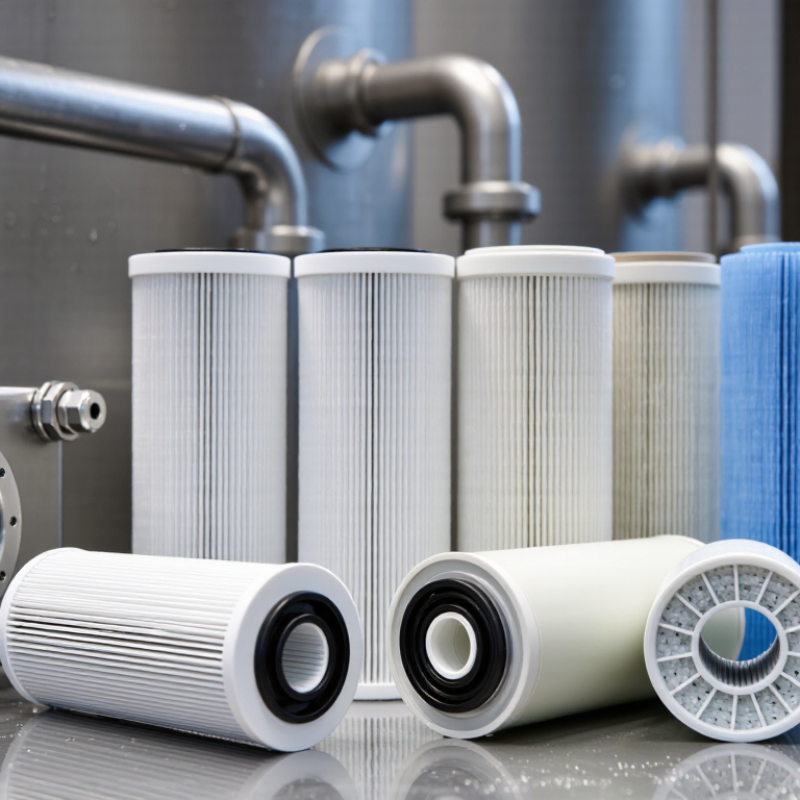
7 Tips to Choose a Micron Pleated Filter Cartridge

Understand Micron Ratings and Filtration Requirements

7 Tips to Choose a Micron Pleated Filter Cartridge

Understand Micron Ratings and Filtration Requirements

Tip 1: Define the contaminant before choosing a cartridge. A micron rating describes the particle size a filter can retain, but ratings are not always comparable. A 5-micron nominal filter may allow some larger particles through, while an absolute rating offers a tighter, tested limit. Ask for the test method and retention data. The number alone is not enough.

Tip 2: Match filtration precision to the process. Start with the smallest harmful particle, then check the required flow rate, pressure, temperature, and fluid chemistry. A finer cartridge can improve clarity, but it may create higher pressure loss or clog sooner. I have seen clear outlet liquid hide an undersized filter working near its limit. That is easy to miss.

Tip 3: Check the pleated cartridge’s construction and usable area. More surface area usually supports better dirt-holding capacity and longer service life, though actual performance depends on the contaminant load. Confirm the media and seal materials suit the liquid. Review compatibility charts, installation guidance, and integrity-test results. Field testing is still valuable.

Keep records. Note pressure before and after filtration, replacement intervals, and visible particle changes. These details reveal whether the selected micron rating is practical, not merely attractive on paper. A small pilot test may prevent an expensive mistake. Even experienced operators revise their choice after real process data appears.

7 Tips to Choose a Micron Pleated Filter Cartridge

Understand micron ratings and filtration requirements before selecting a pleated filter cartridge.

The chart shows representative target micron ratings used for common filtration tasks. Lower micron values provide finer particle removal but may increase pressure drop and require more frequent replacement. Always confirm whether the cartridge rating is nominal or absolute, then match the rating with the fluid, flow rate, contaminant load, operating pressure, temperature, and required cleanliness level.

Identify the Right Filter Cartridge Material

Choosing a micron pleated filter starts with material, not the advertised pore size. Polypropylene suits many general water and process duties because it resists moisture and offers economical depth filtration. Polyester can tolerate higher temperatures and repeated handling. Polyethersulfone provides strong flow and low extractables in demanding liquid applications. Test it wet. Dry compatibility can mislead.

Check seven points: chemical exposure, temperature, pressure, particle load, sterilization method, extractables, and disposal conditions. A 2022 WHO guideline keeps treated drinking-water turbidity below 1 NTU, showing why media selection affects downstream disinfection. However, a 1-micron rating does not remove dissolved chemicals. The U.S. EPA’s 2024 PFAS rule set limits of 4 nanograms per liter for PFOA and PFOS, yet ordinary pleated cartridges should not be treated as reliable PFAS barriers. Adsorptive or membrane stages may be necessary.

I have seen cartridges fail because operators compared pore ratings only. Acidic cleaning fluids, hot water, or sudden pressure changes can soften seals and deform pleats. ASTM F838 is useful when evaluating sterilizing-grade membrane retention, but it does not replace application testing. Request chemical-compatibility charts, extractables data, and a test report using your actual fluid. Keep one uncomfortable question: is the selected medium removing particles, or merely surviving the process? That distinction is easy to miss.

7 Tips to Choose a Micron Pleated Filter Cartridge - Identify the Right Filter Cartridge Material

Tip Filter Cartridge Material Typical Micron Ratings Typical Continuous-Use Temperature Range* Chemical Compatibility Main Advantages Important Limitations Suitable Applications
1 Polypropylene (PP) 0.1–100 µm About 60–90°C Broad resistance to many acids, bases, salts, and aqueous chemicals; verify compatibility with strong oxidizers and solvents. Low extractables, lightweight construction, good chemical resistance, and economical operation. Not suitable for every hydrocarbon or aggressive organic solvent; temperature limits depend on the cartridge design. Water treatment, prefiltration, chemical solutions, process liquids, and general particulate removal.
2 Polyethersulfone (PES) 0.04–1.2 µm About 80–140°C Good resistance to many aqueous solutions over a wide pH range; check compatibility with concentrated solvents and oxidizing agents. High flow rate, low protein binding, and strong performance for fine clarification and sterile-grade filtration. May require compatibility testing for solvent-rich or highly oxidative fluids; sterilization limits vary by construction. Bioprocess liquids, pharmaceutical water, beverages, laboratory fluids, and fine aqueous filtration.
3 Polytetrafluoroethylene (PTFE) 0.02–10 µm About 100–200°C for many cartridge assemblies Excellent resistance to most acids, bases, solvents, and aggressive chemicals; compatibility depends on seals and support components. Very high chemical resistance, hydrophobic options for gas service, and reliable fine-particle or microorganism retention. Hydrophobic PTFE requires pre-wetting for some liquid applications; typically costs more than general-purpose media. Aggressive chemical liquids, solvents, compressed gases, air, vent filtration, and high-purity processes.
4 Nylon 0.1–10 µm About 25–80°C Generally compatible with many oils, hydrocarbons, and alkaline liquids; strong acids and some oxidizers may attack the media. Good mechanical strength, broad use in liquid filtration, and effective fine-particle retention. Can absorb moisture and may not be suitable for strongly acidic or high-temperature service. Hydrocarbon-based liquids, inks, coatings, chemicals, and selected aqueous applications.
5 Polyvinylidene Fluoride (PVDF) 0.05–5 µm About 80–140°C Good resistance to acids, bases, salts, and many solvents; confirm compatibility with strong bases and polar solvents. Low protein binding, good mechanical strength, and strong performance in high-purity applications. Usually more expensive than PP; hydrophobic grades may need wetting before liquid filtration. High-purity water, biotechnology, pharmaceutical processing, chemicals, and solvent-compatible applications.
6 Cellulose 1–100 µm About 25–80°C Suitable for many general aqueous and low-strength process fluids; vulnerable to prolonged moisture, biological growth, and aggressive chemicals. Cost-effective depth filtration with good dirt-holding capacity for relatively clean process streams. Lower chemical, temperature, and microbial resistance than synthetic polymer media. Prefiltration, beverage clarification, edible oils, and non-aggressive liquid processing.
7 Glass Fiber 0.5–20 µm About 60–200°C, depending on binder and support materials Good resistance to many solvents and gases; the binder, housing, and seals can determine final compatibility. High dirt-holding capacity, low fiber diameter, and efficient removal of fine particles from gases and liquids. More brittle than polymer media; not ideal where fiber shedding or extremely low extractables is critical unless properly specified. Air and gas filtration, analytical sample preparation, hydraulic fluids, and prefiltration.

*Temperature ranges are general media-level guidelines, not universal ratings. The actual limit depends on cartridge construction, pressure, exposure time, sterilization method, seals, support layers, and the specific fluid. Always confirm chemical compatibility, differential-pressure limits, and validated retention performance before selection.

Match Cartridge Size, Shape, and Equipment Compatibility

Choosing a micron pleated filter cartridge starts with the housing, not the micron number. Measure cartridge length, outer diameter, inner diameter, end-cap style, gasket profile, and sealing method. A two-millimeter mismatch can create bypass, even when the filter media is correctly rated. Confirm the housing’s flow direction and available differential pressure. The 2023 WHO Guidelines for Drinking-water Quality recommend controlling turbidity because suspended particles can reduce treatment performance and protect microorganisms from disinfection. This makes reliable sealing essential, not optional.

Match the cartridge shape to the equipment’s actual operating conditions. Check liquid viscosity, temperature, chemical exposure, flow rate, and cleaning procedure. A nominal 5-micron cartridge is not automatically equivalent to an absolute 5-micron cartridge. Ask for the test method, retention curve, and clean-pressure-drop data. NSF/ANSI 42 and 53 provide useful performance frameworks, but certification must match the intended application. The U.S. EPA Water Treatability Database also shows that treatment performance depends on water quality and process conditions, not one filter rating alone.

Fit matters most.

In field inspections, operators sometimes measure only the cartridge length. That shortcut fails when end caps or gaskets differ. I would verify a sample cartridge inside the housing before ordering hundreds. It is slower, but cheaper than repeated leakage, premature plugging, or unstable flow. One imperfect assumption can distort the entire filtration design.

Evaluate Flow Rate, Pressure, and Operating Conditions

7 Tips to Choose a Micron Pleated Filter Cartridge

Evaluate Flow Rate, Pressure, and Operating Conditions

Choosing a micron pleated filter cartridge begins with the liquid, not the printed micron number. Define target flow in litres per minute and record viscosity at the actual temperature. A cartridge handling 100 L/min with water may slow sharply with syrup or oil. Ask whether the rating is nominal or absolute. This difference matters. During a plant inspection, I once saw operators select by pipe size alone. The filter loaded early, although its stated capacity looked adequate. That was avoidable.

Compare clean pressure drop at the required flow, then set a replacement limit for differential pressure. A low initial drop leaves more working margin, but excessive area can raise cost and waste space. Check pump pressure, surge pressure, and maximum housing pressure separately. They are not interchangeable. Short pressure spikes can damage seals or deform a cartridge. Use measured data when possible. Estimates often hide the real problem. Keep a pressure gauge before and after the housing.

Operating conditions complete the selection. Confirm temperature, chemical compatibility, cleaning method, and expected solids load. Fine particles can blind pleats quickly, while irregular debris may require prefiltration. Flow should remain stable throughout production, not only during startup. I would test a spare cartridge under worst-case conditions. It may reveal swelling, bypass, or a rapid pressure rise. Do not ignore installation details. A loose seal can mimic poor filter media, sending troubleshooting in the wrong direction. Record failures too. Imperfect data remains useful when the next cartridge is chosen.

Compare Service Life, Maintenance, and Total Cost

7 Tips to Choose a Micron Pleated Filter Cartridge

Service life should be measured in operating hours, not optimistic catalog claims. The U.S. Department of Energy reports that compressed-air systems may consume 10% of industrial electricity. A clogged cartridge raises pressure drop and increases compressor workload. Check inlet pressure, flow rate, temperature, and contaminant loading before comparing cartridges. A filter lasting twice as long may still cost more if its initial pressure drop is higher.

Maintenance records reveal the practical difference. Record differential pressure weekly, inspect the housing seal, and replace the cartridge before flow becomes unstable. ASTM F838 provides a recognized method for evaluating bacterial retention in membrane filters, but test results do not predict every plant’s service life. Real water quality matters. Particle size distribution matters more than a single micron rating. I once treated a 5-micron claim as a complete comparison. It was not.

Total cost includes purchase price, labor, disposal, downtime, compressed-air energy, and rejected product. The U.S. Department of Energy’s compressed-air guidance recommends reducing pressure losses and correcting maintenance problems because small losses can become continuous energy expenses. Request pressure-drop curves at your actual flow, not only at the manufacturer’s preferred test point. Compare annual cost per cubic meter filtered. Keep one trial cartridge under observation for 30 days. The result may challenge the spreadsheet.

Go to Top