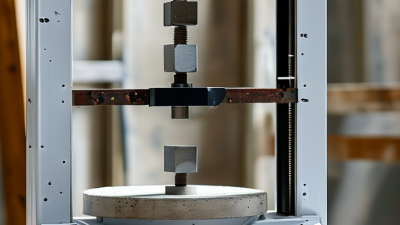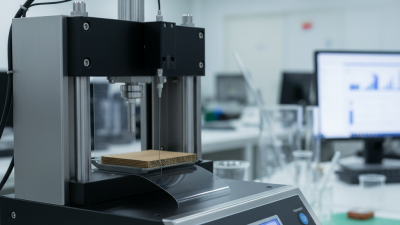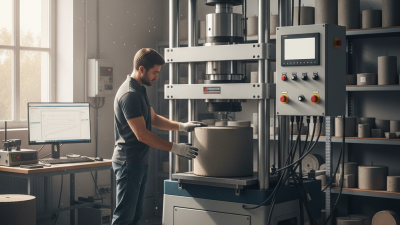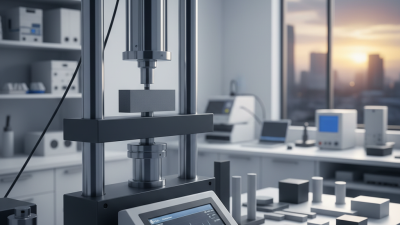

Choosing the right concrete compression testing machine begins with understanding how concrete fails under controlled pressure. These machines measure compressive strength, reveal weak batches, and support decisions on structural quality. A fractured cylinder may look ordinary, yet its failure pattern can expose poor curing, uneven compaction, or hidden testing errors.
This guide examines the top 10 types of concrete compression testing machines used in laboratories, factories, and construction sites. It considers manual, automatic, digital, servo-controlled, hydraulic, and portable designs. Each type suits different specimen sizes, loading ranges, accuracy needs, and working environments. Some machines serve routine cube testing. Others support advanced research with precise load control and data recording.
Reliable testing depends on more than maximum capacity. Frame stiffness, platen alignment, calibration, loading speed, and operator training affect every result. Relevant methods, such as ASTM C39 and EN 12390-3, should guide test preparation and reporting. However, equipment alone cannot correct damaged specimens or careless measurements. That point is easy to overlook.
Real laboratory experience shows that convenience can sometimes hide limitations. A compact machine may save space but offer less flexibility. An automatic model may reduce operator variation but still require regular verification. No machine is perfect. Careful selection means matching technical performance with actual testing conditions, maintenance resources, and long-term reliability. This comparison aims to provide practical, evidence-based guidance for engineers, technicians, buyers, and quality managers seeking dependable concrete strength results.
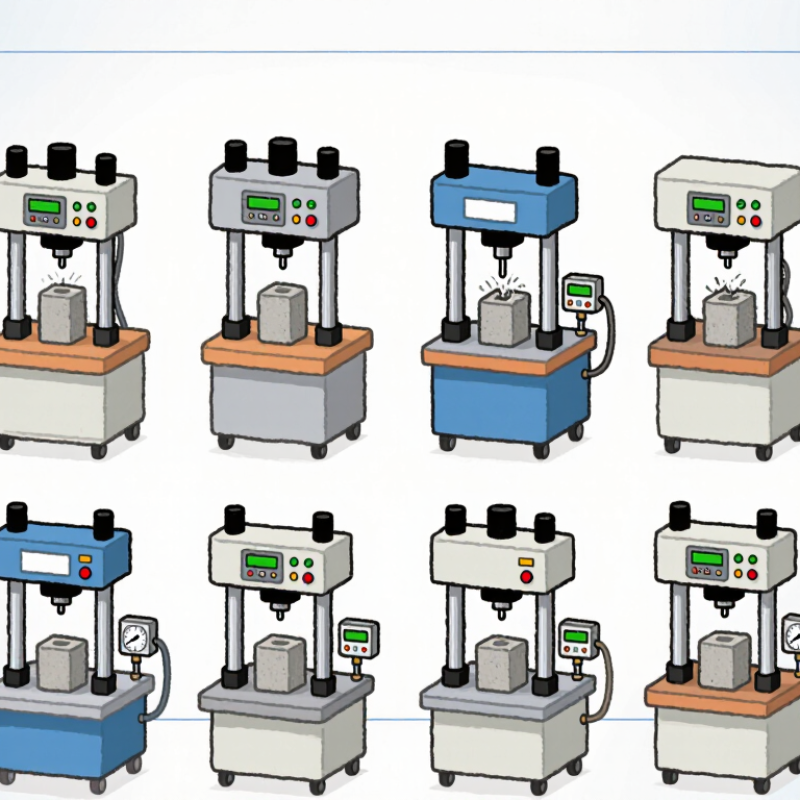
Concrete compression testing machines are commonly grouped as manual hydraulic, digital hydraulic, automatic servo-controlled, and computer-managed systems. Their suitability depends less on appearance than on control, alignment, and traceable calibration. ASTM C39 typically evaluates cylindrical concrete specimens, while EN 12390-3 covers cubes and cylinders. The machine must match the specimen size and expected failure load.
Under ASTM C39, load should increase steadily at approximately 0.25 ± 0.05 MPa per second. EN 12390-3 generally requires a faster controlled stress rate, commonly 0.6 ± 0.2 MPa per second. Always verify the current standard edition. Small errors matter.
A poorly centered cylinder can show uneven cracking and misleading strength results. Hardened bearing faces, clean platens, and correct capping or grinding are essential.
In laboratory practice, servo-controlled machines provide the best repeatability because they regulate loading automatically. Manual hydraulic machines can still work well when technicians monitor the gauge carefully. Before testing, I check platen parallelism, specimen dimensions, age, moisture condition, and calibration records. Even experienced technicians occasionally overlook a chipped edge. That weakness should be recorded, not hidden. The final report should include specimen type, dimensions, curing history, maximum load, calculated strength, failure pattern, and any deviation from ASTM C39 or EN 12390-3 procedures.
Concrete compression testing machines are selected by load capacity, control method, and specimen geometry. Manual hydraulic machines remain practical for small laboratories and routine site checks. They rely on an operator to raise pressure steadily and record the peak load. Digital machines add automatic loading control, peak-force capture, data storage, and clearer error alerts. That matters when several technicians share one testing room.
A 100 MPa concrete result demands careful capacity planning. A 150 mm cube requires about 2,250 kN at that stress level. A 100 mm cylinder requires roughly 785 kN. The calculation is simple, but platen alignment and specimen dimensions can change the result.
ASTM C39/C39M and EN 12390-3 require controlled procedures for compression testing, including loading and failure assessment. Calibration should be traceable, not merely displayed on a screen.
The Global Cement and Concrete Association reports approximately 14 billion cubic metres of concrete are produced annually worldwide. The 2024 USGS Mineral Commodity Summaries also estimated global cement production near 4.1 billion metric tonnes in 2023. Manual systems can be dependable. Digital systems can reduce transcription mistakes. Neither machine compensates for poor curing or uneven end surfaces. That assumption is convenient, but not always honest. Small laboratories may also overvalue automation and undervalue operator training.
Top 10 Types of Concrete Compression Testing Machines
Hydraulic Compression Frames: 1,000–3,000 kN Capacity Classes
Hydraulic compression frames in the 1,000–3,000 kN range suit structural concrete laboratories and production plants. They handle cubes, cylinders, and higher-strength specimens with stable force control. ASTM C39/C39M specifies a loading rate of 0.25 ± 0.05 MPa/s for cylindrical concrete specimens. That requirement makes hydraulic control more suitable than rough manual loading.
Capacity selection needs a calculation, not guesswork. A 150 mm concrete cylinder has a loaded area of about 17,671 mm². At 50 MPa, it requires roughly 884 kN. At 100 MPa, the force approaches 1,767 kN. A 2,000 kN frame may therefore be practical for many tests. Larger cubes can demand more force. EN 12390-3 also emphasizes controlled loading and accurate failure measurement. Small alignment errors can distort results. I have seen excellent machines produce questionable data because technicians ignored platen seating.
Tips: Check the specimen size, expected strength, and safety margin before purchasing. Verify calibration with traceable proving equipment. Keep the platens clean and parallel. Record loading rate, fracture pattern, and unusual sounds. The frame may be strong, but the test setup is not always perfect. Review unexpected results instead of repeating them automatically. Calibration intervals should follow laboratory procedures and applicable standards, while annual verification is commonly used in professional facilities.
| No. | Hydraulic Frame Type | Nominal Capacity | Typical Test Configuration | Common Specimen Applications | Load Control and Measurement | Typical Structural Features | Relevant Test References | Typical Use Level |
|---|---|---|---|---|---|---|---|---|
| 1 | Standard Four-Column Compression Frame | 1,000 kN | Single-action hydraulic loading with a fixed lower platen | 100 mm and 150 mm concrete cubes; 100 mm and 150 mm diameter cylinders | Manual or digital load display; hydraulic pressure converted to force | Rigid four-column frame, spherical upper platen, replaceable bearing plates | ASTM C39/C39M; EN 12390-4 | Routine laboratory testing |
| 2 | Compact Laboratory Compression Frame | 1,000 kN | Bench-oriented or compact floor-mounted arrangement | Concrete cubes, cylinders, mortar prisms, and small masonry units | Hydraulic hand pump or motorized pump with a digital force indicator | Reduced footprint, adjustable daylight, removable platens | ASTM C39/C39M; EN 12390-3 | Small and medium laboratories |
| 3 | High-Daylight Four-Column Frame | 1,500 kN | Vertical compression testing with extended platen spacing | Large concrete cylinders, cubes, cores, and grout specimens | Closed-loop load control or rate-controlled hydraulic loading | Increased vertical clearance, guided upper platen, reinforced crosshead | ASTM C39/C39M; EN 12390-4; ISO 7500-1 | Research and quality-control laboratories |
| 4 | Cube-Focused Compression Frame | 1,500 kN | Compression between hardened platens with centered specimen seating | 100 mm, 150 mm, and 200 mm concrete cubes | Digital load cell or calibrated pressure transducer | Large platen area, alignment guides, accessible specimen chamber | EN 12390-3; EN 12390-4; ISO 7500-1 | Concrete production and site laboratories |
| 5 | Heavy-Duty Cylinder Compression Frame | 2,000 kN | Axial compression with controlled loading rate | 150 mm × 300 mm and 100 mm × 200 mm concrete cylinders | Programmable loading rate with digital peak-load recording | High-stiffness frame, spherical seating, heavy-duty platens | ASTM C39/C39M; ASTM E4; ISO 7500-1 | High-strength concrete testing |
| 6 | Dual-Range Hydraulic Compression Frame | 2,000 kN | Hydraulic loading with selectable low- and high-range measurement | Concrete cubes, cylinders, cores, and precast components | Two-range load measurement improves resolution for lower loads | Interchangeable platens, overload protection, adjustable crosshead | ASTM C39/C39M; EN 12390-4; ISO 7500-1 | Multi-purpose laboratory work |
| 7 | Servo-Controlled Compression Frame | 2,500 kN | Automated force or displacement-controlled compression | High-strength concrete cylinders, cubes, cores, and fiber-reinforced concrete | Closed-loop servo-hydraulic control with automatic data acquisition | Stiff four-column frame, electronic safety interlock, digital test logging | ASTM C39/C39M; EN 12390-4; ISO 7500-1 | Advanced research and certification testing |
| 8 | Large-Platen Compression Frame | 2,500 kN | Centered axial compression using extended bearing surfaces | Large cubes, structural cores, pavers, and precast concrete units | Digital force measurement with programmable loading control | Wide platens, increased chamber clearance, reinforced loading head | EN 12390-3; EN 12390-4; ISO 7500-1 | Precast and structural concrete laboratories |
| 9 | High-Capacity Four-Column Compression Frame | 3,000 kN | High-load axial compression with automatic peak-force capture | High-strength concrete cylinders, large cubes, cores, and masonry units | Servo-hydraulic or motorized hydraulic control with calibrated load cell | Heavy reinforced frame, high-strength columns, replaceable platens | ASTM C39/C39M; ASTM E4; EN 12390-4 | Major testing laboratories |
| 10 | Universal Hydraulic Compression Frame | 3,000 kN | Configurable compression setup for multiple specimen geometries | Concrete cubes, cylinders, cores, blocks, and selected precast elements | Computerized load control, rate monitoring, and test-result storage | Adjustable daylight, interchangeable fixtures, guarded test chamber | ASTM C39/C39M; EN 12390-3; EN 12390-4; ISO 7500-1 | Centralized and high-throughput laboratories |
Top 10 Types of Concrete Compression Testing Machines
Servo-controlled machines provide precise loading at 0.6 ± 0.2 MPa/s, a rate specified by EN 12390-3. This controlled pace helps technicians measure compressive strength without sudden hydraulic shocks. The machine adjusts continuously through a load cell, servo valve, and feedback controller. Operators can watch the load curve rise smoothly on screen. Small deviations still matter.
This accuracy is relevant to a large testing market. The Global Cement and Concrete Association reports that the industry produces approximately 14 billion cubic metres of concrete annually. Even a minor testing error can affect quality decisions across major infrastructure projects. Proper platen alignment, stable specimen seating, and regular calibration remain essential. A powerful frame cannot correct poor preparation.
ASTM C39 uses a different loading-rate requirement, commonly near 0.25 ± 0.05 MPa/s. Therefore, laboratories should never copy one standard’s settings into another test method. That assumption is convenient, but incomplete. In practice, technicians should verify the standard, specimen size, moisture condition, and machine software before testing. Calibration records should include force accuracy, displacement response, and rate stability. The European standard also emphasizes consistent stress application. Servo control supports this goal, but it does not guarantee reliable results alone. Human judgment still influences capping quality, alignment, and failure interpretation. Industry reports provide useful scale; laboratory records provide the evidence.
Representative rated-capacity classes for servo-controlled and hydraulic concrete compression testing systems designed for precision loading at 0.6 ± 0.2 MPa/s.
Rated capacities are representative standardized capacity classes commonly used for concrete cube, cylinder, prism, and high-strength concrete testing. Actual selection depends on specimen size, target strength, applicable testing standard, and required control accuracy.
The top ten machine types include manual hydraulic, digital hydraulic, servo-hydraulic, and electromechanical systems. Automatic closed-loop, semi-automatic, high-capacity, low-capacity, cube, and cylinder testers also deserve attention. Capacity should match the specimen and expected failure load. A 2,000 kN frame may suit structural concrete, but it can be excessive for routine cubes. Excess capacity may reduce practical resolution and increase operating costs.
Accuracy requires more than a clear digital display. Check force resolution, platen alignment, loading stability, repeatability, and data recording. ISO 7500-1 calibration verifies the force-measuring system and supports reliable machine classification. Calibration should include traceable equipment, documented procedures, and clear acceptance results. Ask for calibration records before comparing prices. A machine with excellent specifications can still perform poorly if maintenance is neglected. Field experience often exposes this gap. A first shortlist may be wrong after reviewing specimen sizes and laboratory workflow.
Tips: Compare the machine’s working range with your usual test loads. Inspect the platens for flatness and smooth movement. Record calibration dates and verification results. Train operators to center specimens carefully. Small alignment errors can change failure patterns. Do not ignore temperature, oil condition, or hydraulic leaks. These details are easy to miss. Recheck the selection after several trial tests, because real laboratory use may reveal limitations.